A gym mirror should help lifters check form, brighten the room and survive a busy training floor without becoming a safety risk. For a gym mirror wall, choose toughened safety glass or safety-backed float glass, polished edges, secure fixing and placement that matches each training zone. This guide covers gym mirror price factors, design ideas, installation kit basics and what changes for a home gym.
What Kind of Gym Mirror Works in India?
Commercial gyms generally use toughened safety glass or safety-backed float glass with polished edges. The point is simple: the mirror must look clear, sit flat on the wall and reduce risk if an impact happens. Regular decorative mirror can look fine in a living room, but a training area has moving plates, dumbbells, benches and people lifting under fatigue.
Thickness matters because a thin panel can flex more on an uneven wall, while a thicker panel is heavier and needs more careful fixing. Size is usually planned around wall bays, racks, pillars, switchboards and ceiling height. Instead of buying random panels, mark the usable wall, decide where the mirror should start, and keep the lower edge above dumbbell racks or other equipment that may contact the glass.
A gym mirror is not usually a special “fake” mirror. The look people notice in gyms comes mostly from lighting, wall angle, camera angle, posture and distance from the glass. Seedhi baat: ask for safe glass and clean installation, not trick glass.
Gym Mirror Price: What Changes the Cost?
There is no single gym mirror price that fits every room because the cost depends on cut size, glass type, thickness, safety backing, edge polishing, cut-outs, transport handling, wall condition, fixing method and trim. A long studio wall, a compact home gym mirror, and a free-weight mirror behind racks are all different jobs.
If you are comparing a “gym mirror cheap” listing with a safer commercial quote, check what is included: glass type, safety backing, polished edges, adhesive, clips or frame, corner finishing and site handling. Low-cost panels may be fine for a calm home corner, but a dumbbell zone needs more caution because impact risk is higher.
Gym Mirror Wall Placement by Zone
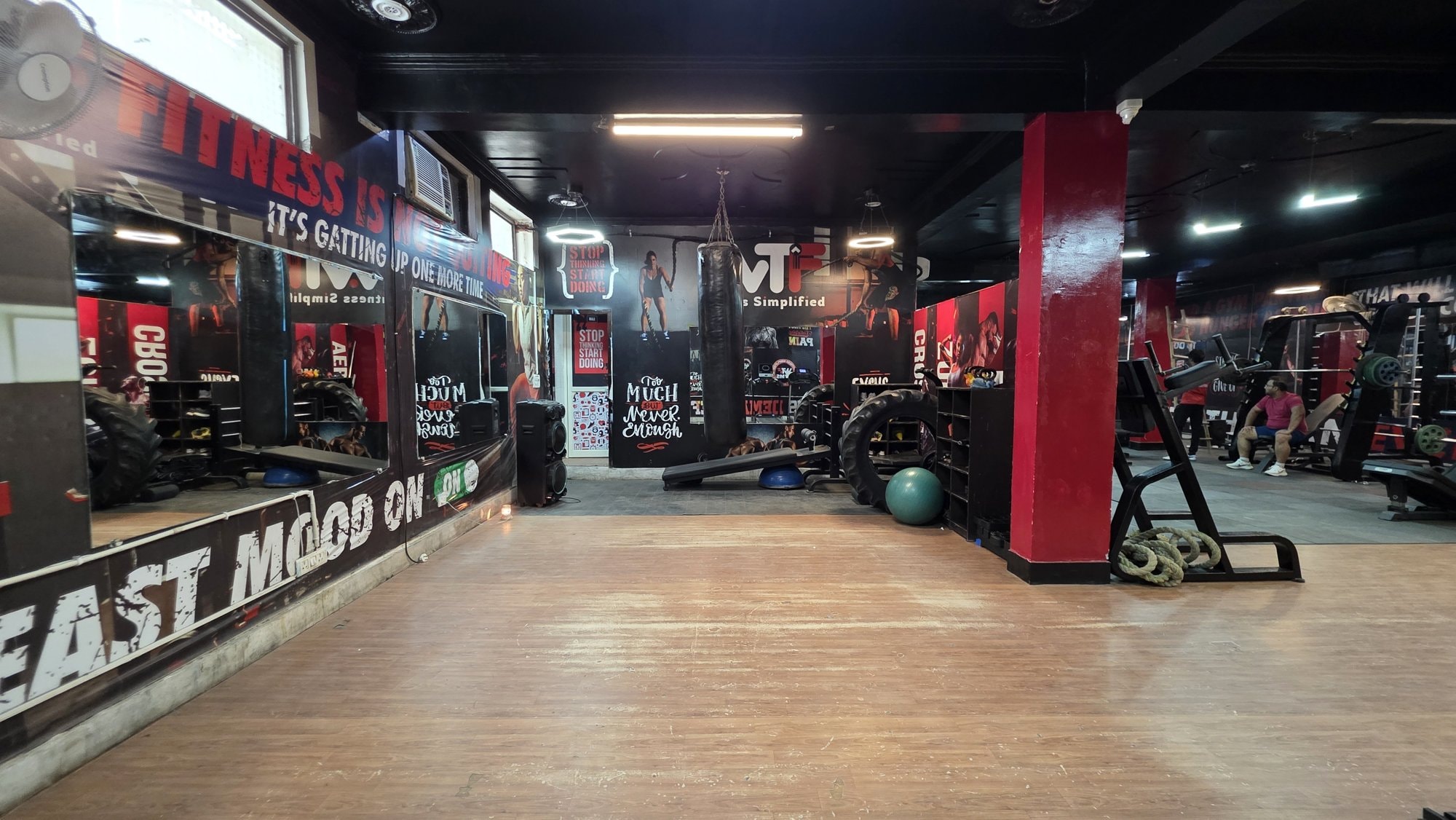
Mirror placement should follow the training purpose. A mirror behind a dumbbell zone is useful for pressing, curling, lateral raises and general posture checks. In a studio, mirrors support dance, group training and mobility coaching. In functional areas, use them more carefully because kettlebells, sled work, battle ropes and wall balls can make a mirrored wall a risk if it is too close to the action.
Plan the mirror together with equipment, flooring and circulation. If you are still arranging stations, start with a practical gym layout guide and make sure the wall does not force members to walk too close behind a lifter. Flooring also matters: stable rubber flooring reduces wobble near racks and benches, so pair mirror planning with the gym flooring guide.
| Zone | Mirror use | Placement caution |
|---|---|---|
| Dumbbell area | Form check | Keep above racks |
| Studio room | Group alignment | Avoid glare |
| Functional zone | Selective use | Keep away from throws |
| Cardio line | Room depth | Control reflections |
| Home gym | Compact feedback | Use safer backing |
Gym Mirror Design Ideas That Do Not Create Problems
Good gym mirror design is usually quiet. The wall should look clean, but the main aim is safe visibility. Avoid placing vertical joints exactly where a lifter’s face or bar path is reflected; joints can distract during heavy sets. Align panels with rack runs, pillars or wall graphics so the room looks intentional.
- Use full wall sections in studios where group movement needs clear visual feedback.
- Use shorter mirror runs behind dumbbell racks where the lower wall is blocked by equipment.
- Leave space for switchboards, cleaning access and wall-mounted accessories.
- Use gym mirror trim or a slim frame to protect exposed edges and create a finished look.
- Check lighting angle before final fixing; harsh light can create glare and make a mirror feel distorted.
For the free-weight zone, mirror planning should match rack depth and bench movement. WTF’s Pro tier is: “Pro — performance/club duty for the free-weight zone: dumbbells, plates, bars, benches and racks built for thousands of drops and re-racks a week.” That is why wall protection, mirror height and traffic gaps matter around free-weight equipment.
Catalogue examples help you visualise the wall. The Dumbbell Rack 2 Tier DR01 has a heavy-duty commercial steel frame and is made in India; see the DR01 two-tier rack. The Dumbbell Rack 2 Tier DR02 has a heavy duty frame and is made in India; see the DR02 rack option. The Dumbbell Rack 3 Tier DR03 also has a heavy duty frame and is made in India; see the three-tier dumbbell rack. Keep the mirror lower edge above the rack line, not behind dumbbell heads.
Gym Mirror Installation Kit and Fixing Methods
A gym mirror installation kit is not just glue. A proper setup usually combines mirror-safe adhesive with mechanical support such as clips, J-channel, a frame or trim. The wall must be flat enough for the panel to sit without stress points. If the wall is damp, dusty, flaky or uneven, solve that before the mirror goes up.
- Confirm the wall area, equipment line and walk space.
- Choose toughened safety glass or safety-backed float glass with polished edges.
- Decide the fixing method: adhesive plus clips, channel, frame or trim.
- Mark panel joints so they do not interrupt main exercise sightlines.
- Keep the bottom edge above dumbbell racks, benches and plate storage.
- Clean only with non-abrasive methods and avoid soaking the edges.
If a bench faces a mirrored wall, check user clearance and the path of plates before drilling or fixing. The Olympic Flat Bench J023 has a heavy duty frame and is made in India; its position can be planned with the J023 flat bench page before final mirror height and width are marked.
Gym Mirror for Home Rooms
A gym mirror for home use can be simpler, but safety still matters. If children, pets or tight spaces are involved, consider safety-backed glass or acrylic-style shatter-resistant options. Acrylic can be lighter, but it may scratch more easily and can reflect differently, so place it where close form feedback is useful but impact risk is controlled.
For a home gym mirror room, avoid installing a panel where a door can hit it, where a barbell sleeve can swing into it, or where sunlight creates glare during workouts. If you are building a compact room around a rack, bench, dumbbells and flooring, use a home gym setup guide before you finalise the mirror wall.
How WTF Helps With the Equipment Around the Mirror
WTF runs 260+ gyms across India, so the advice here is deliberately practical: place mirrors where they help training, protect edges, and do not let the mirror fight the equipment layout. For equipment purchases, WTF delivers and installs, provides a full GST invoice, and gives an itemised quote within 24 hours.
You can also visit the showroom at D-27, Sector 112, Noida, UP 201305, where buyers can see machines in person; use the Noida showroom directions before travelling. If your question is about opening costs, rent, staffing or fit-out budgets beyond equipment, that belongs to the sister resource on total cost to open a gym.
For broader planning, remember the WTF duty tiers. “Core — full-commercial duty: cardio, selectorized, plate-loaded and functional lines rated for 16hr+/day floors, 7 days a week; 3mm steel main frames; continuous-duty AC motors on cardio (up to 5HP continuous).” “Signature — flagship strength pieces, heaviest builds in the range, for the zones that sell memberships on a walk-through.” Match the mirror wall to these zones, not the other way round.