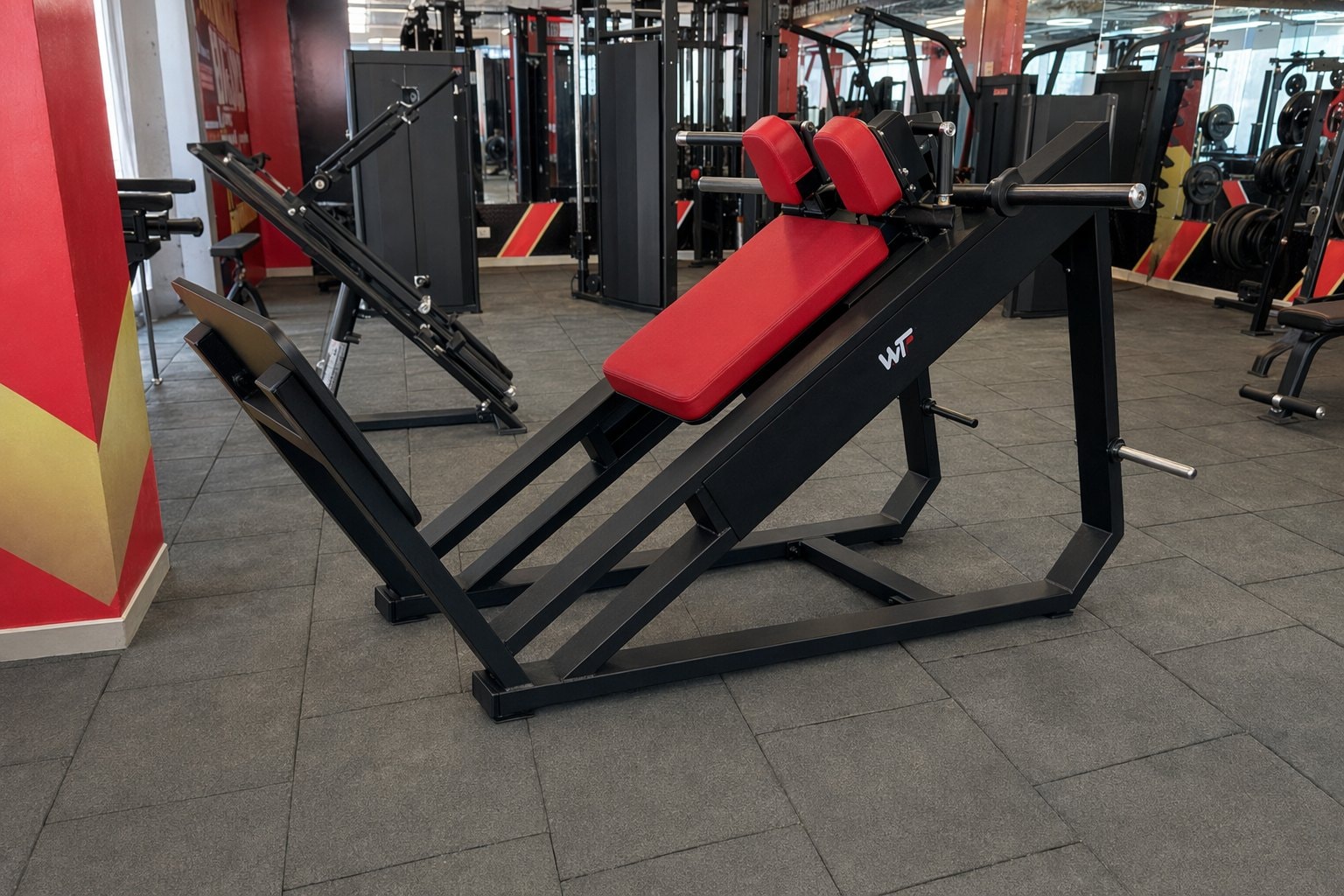
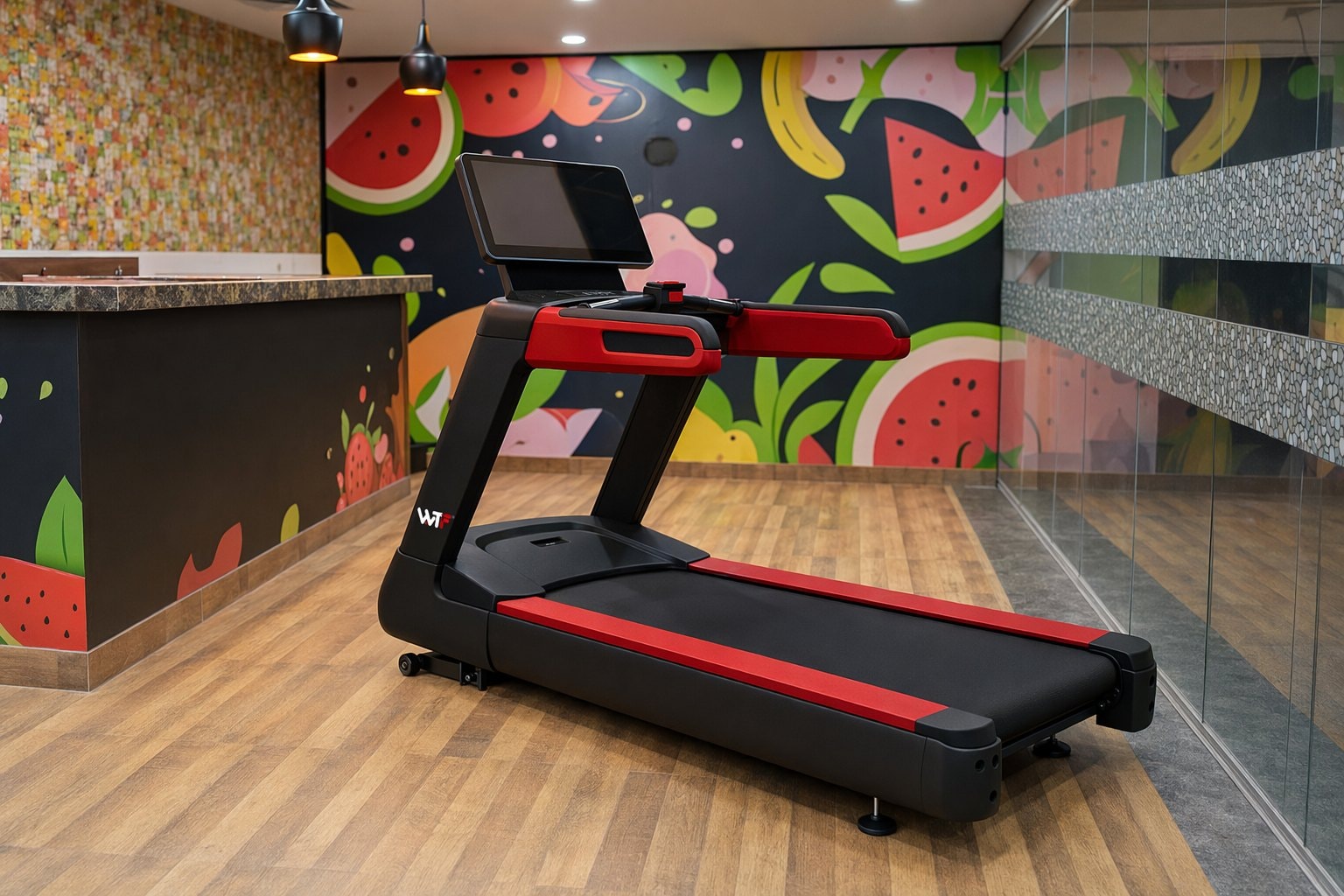
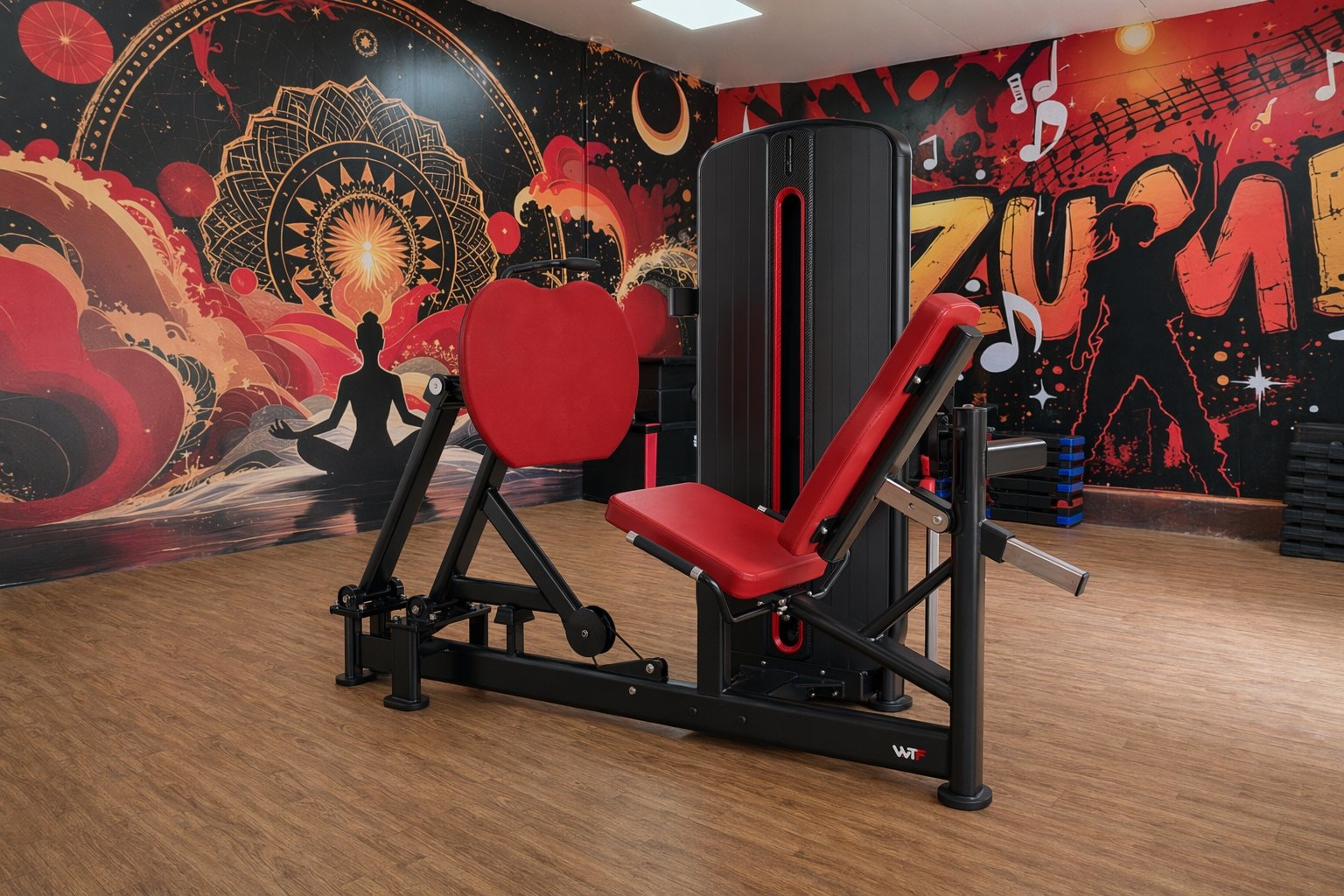
Gym flooring should be selected zone by zone, not as one material for the entire gym. For most Indian commercial gyms and serious home gyms, the practical mix is rubber rolls or tiles for training areas, EVA mats for light studio use, EPDM where finish matters, turf for movement lanes, and a deadlift platform where barbells drop.
Start With Zones, Not Just Material
The common mistake is asking for one gym floor mat for the full site. Cardio machines, selectorized strength, free weights, stretching, sled work and deadlifts all load the floor differently. A treadmill zone mainly needs a stable, cleanable surface. A dumbbell zone needs protection against repeated placement and accidental drops. A lifting bay needs a platform strategy, not only thicker tiles.
WTF runs 260+ gyms, so this guide is written as practical buying advice for equipment floors in India. For equipment context, check WTF's ratings guide before matching flooring to usage.
Flooring must support that equipment plan. Use the functional training range as the broad bucket for mats, tiles, rolls and platforms, then map each product to the area where it makes sense.
| Zone | Practical surface | Why it fits | Watch-out |
|---|---|---|---|
| Cardio | Rubber roll or square tile | Stable under machines | Keep joins neat |
| Selectorized machines | Rubber flooring | Handles equipment footprints | Level subfloor first |
| Free weights | Thicker tiles plus platforms | Drop tolerance improves | Do not rely on thin mats |
| Studio or mobility | EVA mats or yoga mats | Comfort for floor work | Not for barbell drops |
| Walk-through feature area | EPDM or colour tile | Cleaner visual zoning | Match colours carefully |
| Deadlift bay | Dedicated platform | Controls bar path and landing | Needs clear boundaries |
Rubber Rolls, Tiles and EVA Mats Compared
Rubber rolls suit larger continuous areas because they reduce the number of joints. WTF lists Gym Roll in 10 mm, 15 mm and 20 mm thickness options, made in India. Rolls are a clean choice for cardio rows, machine areas and general training space where you want a sheet-like finish.
Interlocking rubber tiles are easier to plan around odd corners and future layout changes. WTF Interlock Tiles come as 20 in × 20 in tiles in 10 mm, 15 mm and 20 mm thickness options. Plain colour options include Black, Grey, Terracotta and Blue, plus multi-colour textures on black. They are useful where you want replaceable sections and simple edge planning.
Square gym flooring tiles give a more conventional tiled grid. WTF Square Tiles are 20 in × 20 in, made in India, and available in 10 mm, 15 mm, 20 mm and 25 mm thickness options. Colour options include Black, Grey, Terracotta and Blue. This is a practical format for free-weight zones where you may want thicker options than a general machine zone.
EVA foam mats sit in a different lane. WTF EVA Interlocking Matts are 1 × 1 m mats available in colour combinations such as Black & Grey and Blue & Red, with 20 mm and 25 mm thickness options. They are comfortable for bodyweight work, stretching and low-impact studio use, but should not be treated as a deadlift floor.
Thickness Choices by Training Area
Thickness is not a status symbol; it is a load decision. A cardio zone with treadmills, bikes and cross trainers needs stability and a tidy finish. A free-weight zone needs more material under impact. A lifting platform needs a defined structure so barbell landings happen where planned.
For rubber flooring, WTF's range includes 10 mm, 15 mm and 20 mm in Gym Roll; 10 mm, 15 mm and 20 mm in Interlock Tiles; and 10 mm, 15 mm, 20 mm and 25 mm in Square Tiles. Do not compare thickness alone without checking format, join quality, subfloor condition and whether the zone will receive dumbbell drops.
| Area | WTF thicknesses to consider | Format to review |
|---|---|---|
| Cardio rows | 10 mm, 15 mm or 20 mm | Rolls or tiles |
| Machine strength | 10 mm, 15 mm or 20 mm | Rolls, square or interlock tiles |
| Free weights | 15 mm, 20 mm or 25 mm | Square tiles (25mm); square or interlock (15–20mm) |
| Stretching | 6 mm yoga mat or EVA mats | Loose mats or interlocking EVA |
| Deadlifting | Platform-led choice | Dedicated platform |
For yoga and floor work, WTF lists an EVA Yoga Matt with 6 mm thickness, made in India. There is also a Folding Yoga Matt with commercial-grade materials, made in India. These are not replacements for structural gym flooring; treat them as user-contact mats over a finished floor.
EPDM, Hexagonal Tiles and Visual Zoning
EPDM is often chosen when the gym wants a more designed look without leaving the rubber flooring family. WTF EPDM Square Tiles are 20 in × 20 in tiles with a black base and coloured texture options including Blue, Red, Yellow, White and Multicolor. Thickness options listed are 10 mm, 15 mm and 20 mm.
Hexagonal formats are more about visual pattern and zoning than basic utility. WTF Hexagonal Tiles are listed in plain colours such as Black, Grey, Terracotta and Blue, and multi-colour textures on black, with 15 mm thickness. They can work in feature corners, mobility zones or pathways where the floor is part of the design language.
Use coloured or shaped tiles carefully. Too many colours can make equipment alignment look messy, especially in a compact Indian gym. A simple plan is to keep strength areas darker, highlight functional lanes or stretching areas, and use border lines only where they help users understand movement.
Artificial Turf and Deadlift Platforms
Artificial turf is useful for sled pushes, walking lunges, battle-rope areas and movement drills. WTF does not list a turf product, so plan turf as a separate lane only if your training concept needs it. Make sure the turf edge transitions safely into rubber flooring so users do not catch a foot on a raised seam.
Deadlifts need a different answer. A thick mat may reduce noise and surface damage, but it does not automatically create a disciplined lifting bay. WTF lists a Deadlift Platform, model OP09, with a Heavy Duty Frame, made in India. A marked platform also tells members exactly where loaded bars belong.
If the rack and platform should be one training station, WTF lists the Half Rack with Deadlift Platform, model HR01, with a Heavy Duty Frame, made in India. This suits a free-weight zone where squats, rack pulls, presses and pulls need a defined footprint.
Subfloor Prep, Joins and Cleaning
The floor under the flooring matters. Before any roll, tile or EVA mat goes down, check that the subfloor is level, dry, clean and free from loose debris. Uneven concrete can telegraph through tiles, create rocking under machines and make joins open earlier than expected. If the surface has cracks or damp patches, fix that before buying the visible layer.
For rubber rolls, plan the direction of the run before installation. Long straight runs look clean in cardio and machine zones, but badly planned seams can cut across walkways. For interlocking tiles, keep the grid square to walls or equipment lines. Do not start randomly from the centre unless the layout has been measured.
Cleaning is mainly about routine discipline. Dry dust removal, damp mopping with suitable cleaners, and quick attention to sweat or chalk buildup will keep the floor more usable. Avoid flooding the floor, especially around joins, under machines and at edges. Sensible daily care keeps the floor paisa vasool.
- Keep rubber flooring joins away from the exact line where benches are dragged.
- Place platforms before finalising surrounding tile cuts.
- Use transition strips where flooring height changes at doors or turf lanes.
- Plan cable machine and rack positions before cutting tiles.
- Keep a small labelled reserve of tiles if the layout may change later.
Home Gym Flooring vs Commercial Gym Flooring
Gym flooring for home can be simpler because the traffic is lower and the layout is usually fixed. Still, do not use a soft foam mat under heavy equipment if the machine needs a stable base. For a serious home gym, use rubber tiles or roll flooring under equipment, and keep EVA or yoga mats for stretching and mobility work.
Commercial gym flooring must handle repeated movement, cleaning, re-racking and layout pressure. It also has to look consistent across cardio, strength and functional areas. If you are planning both equipment and flooring together, the gym layout guide can help you separate noisy zones, wet-shoe entry paths, free weights and open training space before final quantities are locked.
For a compact training room at home, the home gym setup guide is more relevant than a full club-style layout. Measure doors, ceiling height, machine footprint and walking space first. Then select flooring thickness and format around the equipment, not the other way around.
Gym Flooring Price and Quote Checks
For rubber flooring price planning, use the rubber-roll MRP / list-price band from our price guide: ₹260–₹398 per sq ft MRP. Treat this as a rubber-roll price-guide band, not a specific product rate or a final bill for every site. The final quote depends on chosen product, thickness, area, wastage from cuts, joins, site shape and installation scope.
Many buyers search for gym mat flooring price per sq ft, but mats are not always quoted in the same unit. EVA interlocking mats, yoga mats, rubber rolls and square tiles can be compared properly only after converting the layout into an itemised material list. Ask for thickness, format, colour, area calculation and edge details in the quote.
WTF delivers and installs, provides a full GST invoice, and can share an itemised quote within 24 hours. Buyers can also visit the showroom at D-27, Sector 112, Noida, UP 201305, where they can see the equipment range in person. For flooring, carry your room sizes, photos of the subfloor and a rough equipment list so the recommendation stays practical.