Gym equipment maintenance is a simple system: clean daily, inspect moving parts weekly, tighten and lubricate by schedule, and record every issue before it becomes a shutdown. If you are asking how to maintain gym equipment, start with a written checklist for cardio, strength, free weights and flooring. WTF brings an operator lens from 260+ gyms.
Start With Duty, Not Only Cleaning
Maintenance begins by matching equipment duty to the zone, user mix and expected usage pattern, not only by cleaning what is already on the floor. Use WTF's Core, Pro and Signature labels as planning shorthand and compare them in the duty ratings guide.
| Zone | Main checks | Watch closely |
|---|---|---|
| Cardio | Clean touchpoints, inspect belts, decks, pedals, power leads | Noise, slip, vibration, error messages |
| Selectorized strength | Inspect cables, pulleys, guide rods, pins, upholstery | Frayed cable, sticking stack, loose handle |
| Plate-loaded strength | Check frame, pivots, plate horns, pads, bolts | Wobble, cracked pad, rough movement |
| Free-weight zone | Inspect dumbbells, plates, bars, collars, racks | Loose heads, bent bars, damaged sleeves |
| Flooring | Clean, check seams, edges, level changes | Trip points, curling edges, trapped grit |
Daily, Weekly, Monthly and Quarterly Checklist
The gym equipment service checklist below is deliberately simple. It separates cleaning from mechanical inspection so staff do not treat a shiny machine as a safe machine. Use initials, date, machine ID and remarks for every line. If a line is not applicable, mark it as not applicable rather than leaving it blank.
| Frequency | Tasks | Record |
|---|---|---|
| Daily | Wipe grips, consoles, pads and benches; remove sweat, dust and chalk; check obvious cable damage, loose handles and unstable equipment; clear flooring gaps. | Cleaner name, zone, issue tags |
| Weekly | Check treadmill belt tracking and visible deck condition; inspect bike pedals and seat posts; check pulleys, selector pins, upholstery seams, dumbbell heads and rack alignment. | Machine ID, pass or hold |
| Monthly | Verify bolt tightness to manufacturer specification; check cable tension, pulley smoothness, guide rods, weight-stack travel, bar sleeves, collars and flooring edges. | Adjustment made, parts flagged |
| Quarterly | Deep-clean under and around equipment; review lubrication records; inspect all high-use moving assemblies; audit logs for repeat issues and decide replacement or shutdown. | Zone review, action owner |
Cardio Maintenance: Treadmills, Bikes and Ellipticals
Treadmill maintenance
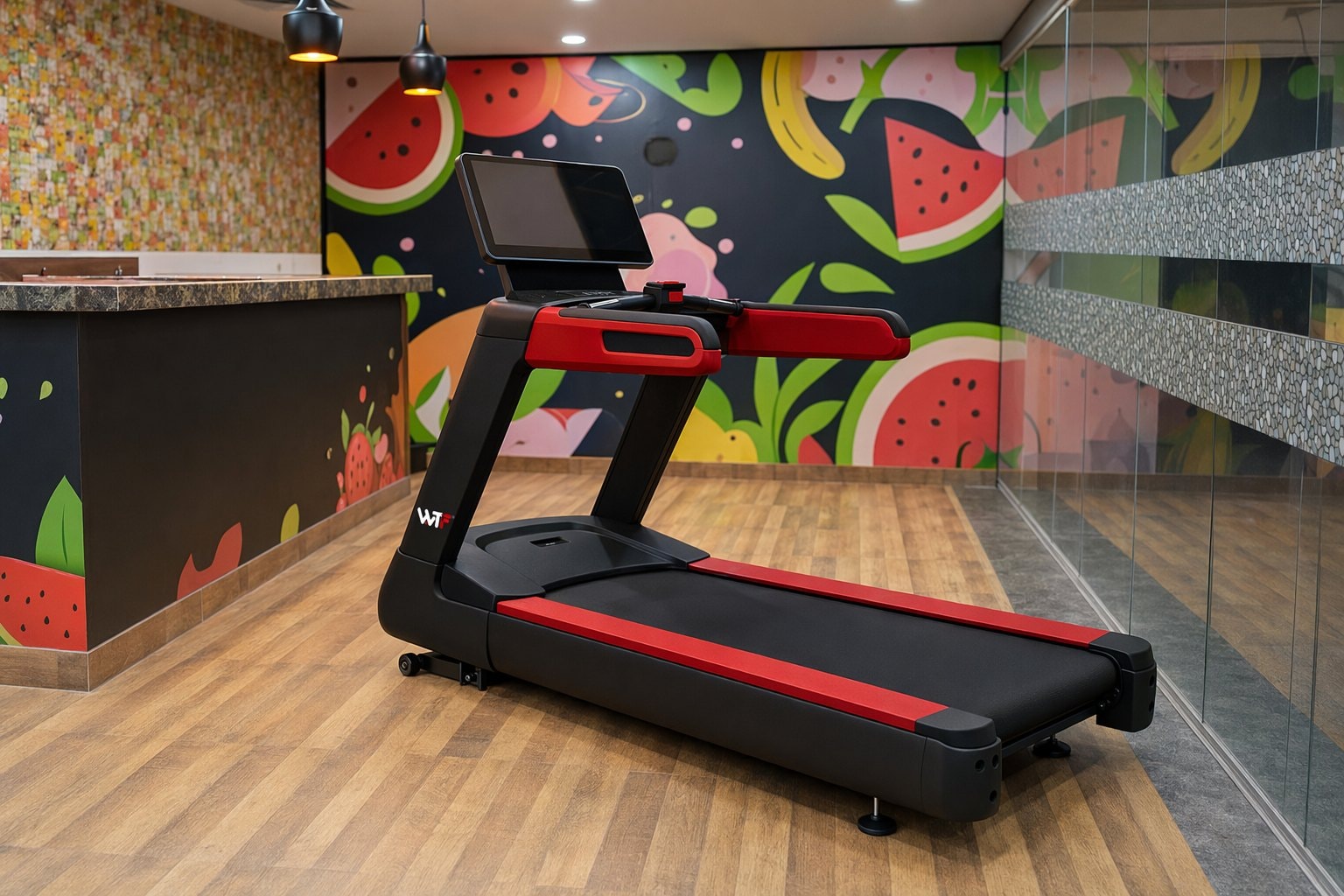
Treadmill maintenance should focus on the belt, deck, motor area, power lead, console and frame stability. Do not wait for a user to report slipping. Check whether the belt is centred, whether the belt surface is damaged, whether the deck edge shows unusual wear, and whether the machine makes new rubbing, scraping or knocking sounds.
For treadmill belt lubrication, follow the manufacturer schedule and lubricant type. Over-lubrication can attract dust and make the area messy; under-lubrication can increase friction. Clean around the deck before applying lubricant, keep the belt aligned, and record the date. The Motorized Treadmill model 22 has an 8 HP peak, 4 HP continuous AC motor, 58 × 150 cm running area, 0–20% auto incline and a heavy-duty deck, so its logbook should include motor-area cleanliness, belt tracking and deck checks.
The Commercial Motorized Treadmill BEAST lists an 8 HP peak, 4 HP continuous AC motor, 60 × 153 cm running area, 0–20% auto incline, maximum user weight of 200 kg and a heavy-duty deck. The BEAST is listed with self-lubrication, so check the lubrication system is working rather than applying lubricant by hand; follow the manufacturer's instructions for other models such as the Model 22. Do not place a user exactly at a machine’s rated maximum; keep sensible headroom so the motor, deck and frame are not treated as if the rating is a daily target.
Spin bike and elliptical checks
On spin bikes, check pedals, crank feel, saddle adjustment, handlebar adjustment and belt-drive noise. The Commercial Spin Bike model 5917 lists a 25 kg flywheel, Poly-V belt drive, maximum user weight of 180 kg, aluminium alloy post and sliders, and dimensions of 1,164 × 617 × 1,250 mm. Its maintenance log should pay attention to post movement, pedal thread condition and belt-drive feel.
Ellipticals need footplate, handle, resistance and stride-path checks. The Commercial Elliptical Cross Trainer AT-666 lists a 21-inch stride, is listed as self-powered, has 32 resistance levels, maximum user weight of 200 kg and a 15.6-inch LED display. Keep dust away from moving joints and check that resistance changes smoothly through the usable range.
If you are planning a cardio section, use the maintenance load as part of selection, not as an afterthought. Bigger cardio floors need labelled plugs, clear walking gaps, machine IDs and a daily closing check. The commercial cardio range should be shortlisted with cleaning access, rated user weight headroom and staff inspection time in mind.
Strength Machines: Cables, Pulleys, Guide Rods and Bolts
Selectorized machines usually give warning signs before a failure. A cable may first show a flat spot, the weight stack may start landing unevenly, a guide rod may feel dry, or a selector pin may stop seating cleanly. Treat these as maintenance findings, not user complaints. A clean machine with a damaged cable should be removed from use until corrected.
For the Lat Pull Down model AMDM-12, WTF's catalogue lists dimensions of 1,340 × 1,365 × 2,290 mm, a 100 kg weight stack and Made in India. Its checklist should include lat bar connection, cable path, pulley rotation, selector pin seating, guide-rod cleanliness and pad condition. For the Leg Press model AMDM-015, which lists dimensions of 1,985 × 1,035 × 1,530 mm and a 100 kg weight stack, check the seat area, stack travel, footplate area and frame bolts.
Cable stations require extra discipline because multiple users pull from different angles. The Cable Cross Over model BK-005 lists a heavy-duty commercial steel frame and Made in India. Inspect attachment points, carabiners, pulleys, cables, guide rods and floor fixing points where applicable. If cable coating is cut, strands are visible, or a pulley is cracked, the station should be marked out of use.
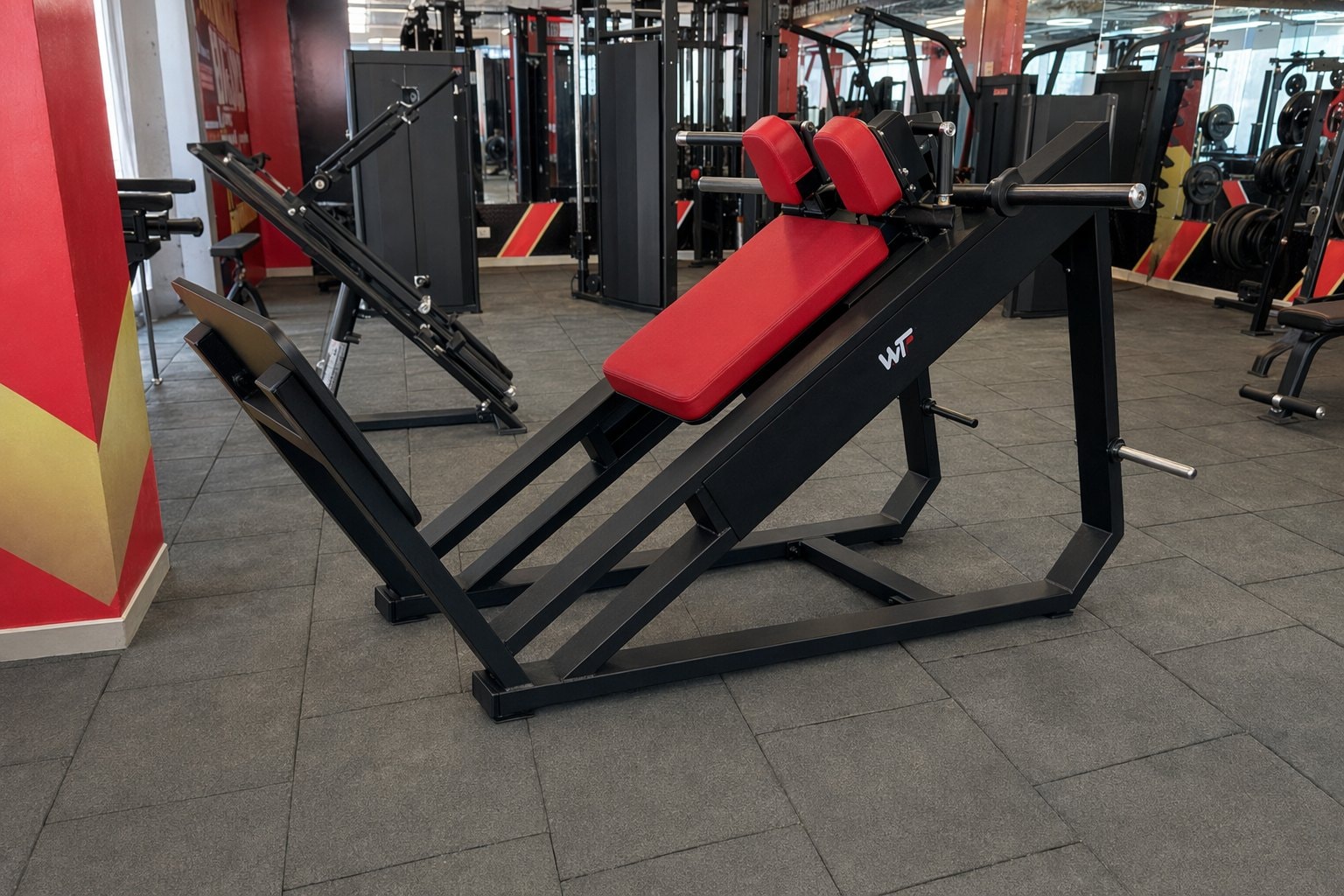
Plate-loaded strength has fewer cables but more loading points. The Vertical Leg Press model A616 lists a heavy-duty frame and Made in India. The Iso Lateral Front Lat Pulldown model AMV16 lists a black frame with red arms and Made in India. For these machines, check plate horns, moving arms, pivots, stop points, bolts, pads and any rubbing marks that suggest misalignment.
When building a mixed strength floor, separate selectorized inspection from plate-loaded inspection. Selectorized equipment needs cable and stack records; plate-loaded equipment needs frame, pivot and loading-point records. The selectorized strength catalogue can help you group machines by maintenance type during planning.
Free Weights, Benches, Racks and Flooring
Free weights look low-maintenance, but they take direct impact. Inspect dumbbells for loose heads, cracked ends, sharp edges, shifting handles and unreadable markings. Inspect plates for chips, distorted centres and burrs that can damage bar sleeves. Inspect bars for bends, sleeve rotation issues, worn knurling that has become sharp, and collars that no longer hold securely.
Benches and racks need pad, weld, bolt and foot checks. A torn pad is not only untidy; it traps sweat and becomes harder to clean. A rack that rocks under re-racking should be removed from use until stabilised. The free-weight zone also needs a storage discipline: plates on horns, dumbbells returned to the correct slot, bars stored straight, collars kept in one place.
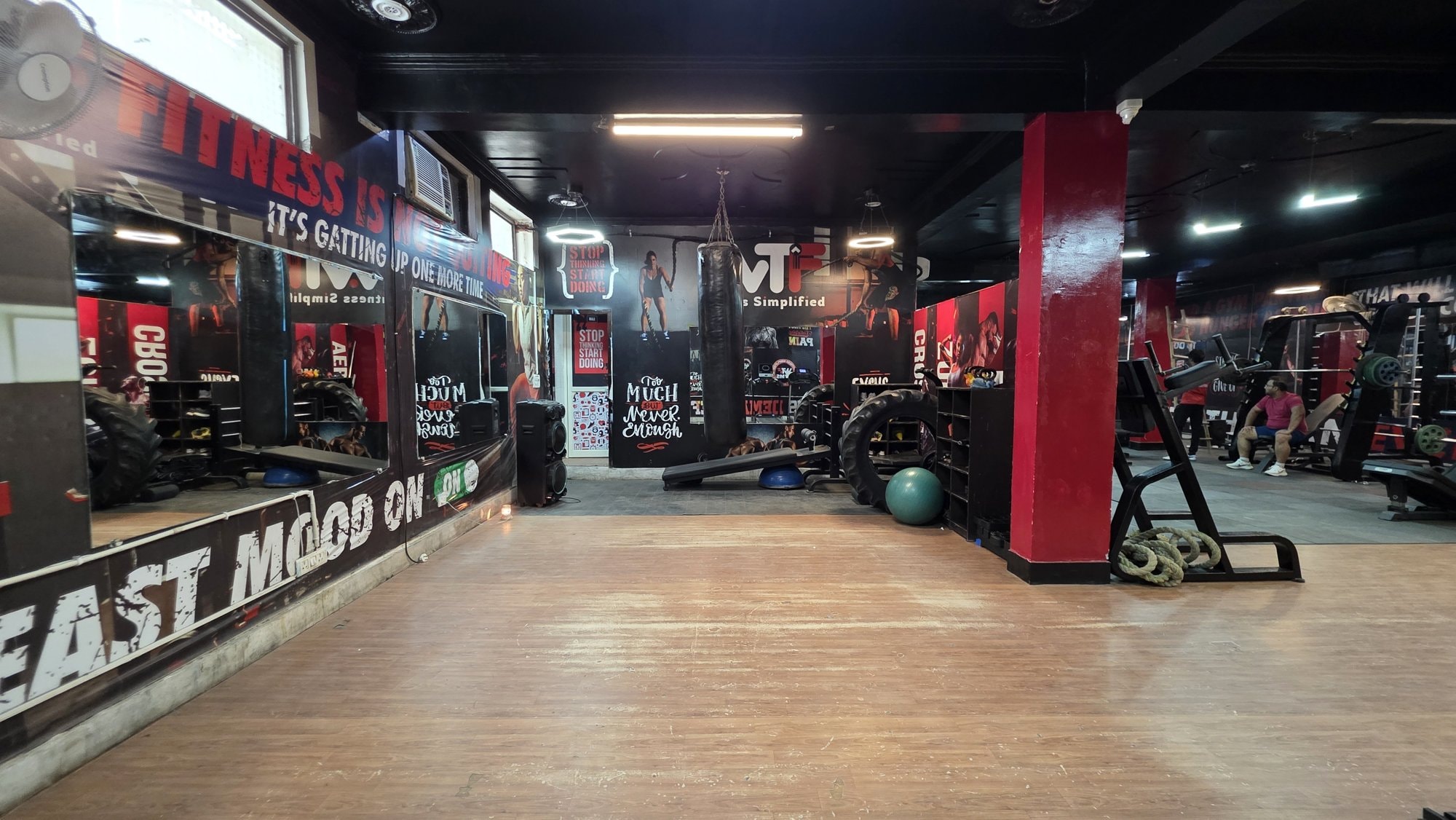
Flooring is part of maintenance, not décor. Grit under cardio machines can get dragged into moving areas. Loose tile edges and curled mat corners are trip hazards. In the free-weight area, check for compressed spots, separated seams and edges that lift when a loaded dumbbell is set down. Plan the free weights area with enough storage so equipment is not left on walking paths.
Signs a Part Must Be Replaced Now
Some findings can be monitored; others need immediate action. Do not keep equipment active when a part is visibly unsafe or movement is unpredictable. Put a clear hold tag on the machine, record the issue, and stop normal use until the part is corrected or replaced.
- Cable strands are visible, cable coating is split, or the cable has a kink that does not straighten during movement.
- A pulley is cracked, jammed, wobbling or cutting into the cable path.
- A treadmill belt is torn, slipping repeatedly after adjustment, or rubbing hard against the side rail.
- A treadmill deck has a cracked or uneven feel, or the machine produces a new burning smell during use.
- A selector pin does not seat fully, or a weight stack sticks and then drops unexpectedly.
- A dumbbell head is loose, a bar is visibly bent, or a collar cannot hold a plate securely.
- A bench pad is torn open, bolts will not hold tight, or the frame rocks on a level floor.
- Flooring has lifted edges, deep cuts, unstable seams or trapped moisture.
Avoid jugaad repairs on load-bearing and moving parts. Tape on upholstery can be a temporary hygiene barrier only if the pad remains stable; tape on a cable, belt, pulley, bar or frame is not a fix. If the machine’s movement changes after a bolt is tightened, stop and re-check alignment instead of forcing the next set.
How to Run the Checklist Across a Busy Floor
A practical system is deliberately simple: machine IDs, zone owners, daily sign-offs, weekly inspections and a visible hold process. The logbook can be paper, spreadsheet or app-based, but it must answer four questions: what was checked, who checked it, what was found, and what action is pending.
- Label every machine, bench, rack and cardio unit with a simple ID.
- Create zones so one owner is accountable for checking and reporting each area.
- Separate cleaning completion from mechanical inspection completion.
- Use a hold tag for any equipment that should not be used.
- Review repeat issues during the quarterly audit and change placement, usage rules or equipment choice if needed.
For gym owners buying equipment, maintenance planning should sit next to layout planning. Ask whether staff can reach behind cardio machines, whether strength machines have inspection access, whether weight trees reduce plate clutter, and whether flooring can be cleaned under benches. For a broader buying frame, compare commercial and home gym equipment choices before finalising a mix.
WTF delivers and installs equipment, provides a full GST invoice, and can share an itemised equipment quote within 24 hours. Buyers can also visit the showroom at D-27, Sector 112, Noida, UP 201305 to see the equipment range in person; use the Noida showroom details before planning a visit. Commercial terms should be checked through the published terms of business.