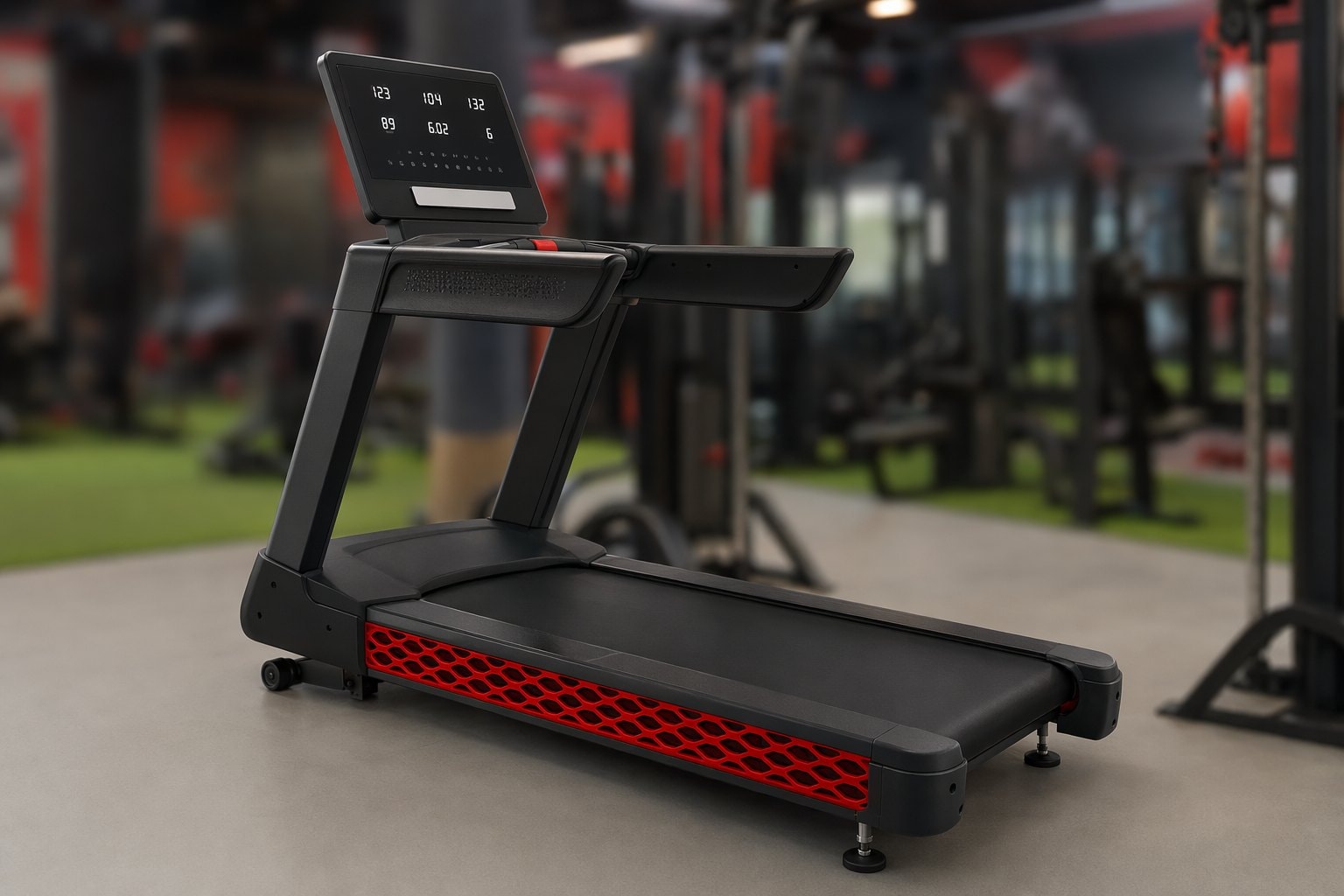
For treadmill vs exercise bike, choose a treadmill if you want walking or running practice and can manage impact, space, noise and power; choose an exercise bike if you want seated, lower-impact cardio that is easier to place at home. For weight loss, neither machine wins automatically: effort, time and diet decide the result. This guide compares treadmill or cycle which is best for Indian flats, home gyms and commercial cardio zones, using WTF catalogue options.
Quick Answer: Match the Machine to the User
If the question is treadmill vs cycle which is better, start with the user, not the machine. A treadmill suits people who specifically want to walk, jog, run, climb with incline, or train for outdoor running. A cycle machine suits people who prefer a seated position, want lower joint impact, or need cardio that is easier to fit into a bedroom, balcony gym corner, office gym or compact commercial floor.
For Indian homes, the choice often comes down to noise, power supply, floor space and who else in the family will use it. For gyms, it is about member mix: runners expect treadmills, while beginners, heavier users, seniors and knee-sensitive users often appreciate bikes. WTF runs 260+ gyms and sells commercial cardio lines, so the advice here is practical: buy for repeat use, not for one exciting workout.
| Factor | Treadmill | Exercise bike / cycle | Buying call |
|---|---|---|---|
| Workout feel | Walking, jogging, running, incline work | Seated pedalling, cadence and resistance work | Pick the pattern you will repeat |
| Joint load | Higher impact during running | Lower impact because body weight is supported | Bike is often easier on knees and ankles |
| Space | Longer footprint and clear area needed | Usually more compact | Cycle is easier for small flats |
| Noise | Foot strike plus motor or belt sound | Pedal, drivetrain or fan sound | Flats need placement planning |
| Power | Motorized models need power | Some models are self-generated or non-motorized | Check plug points before buying |
| Skill | Natural for walkers and runners | Easy to start seated | Bike can suit mixed-age homes |
| Weight loss | Works if intensity and diet are consistent | Works if intensity and diet are consistent | No machine causes spot reduction |
Calories and Weight Loss: What Actually Matters
The common search, treadmill vs exercise bike calories, has a simple answer: calorie burn depends on effort and time, not only on whether the machine is a treadmill or a cycle. A relaxed walk can be easier than a hard cycling session; a tough incline walk can be harder than casual pedalling. The console calorie number is useful for comparison within your own sessions, but it should not be treated as a perfect body-composition measure.
For treadmill vs bike weight loss, fat loss comes from a consistent activity routine plus diet control. There is no spot reduction: a treadmill will not specifically remove belly fat, and a cycle will not specifically reduce thigh fat. Choose the cardio tool that helps you build a repeatable routine, then combine it with progressive training, protein-aware meals, sleep and overall calorie control.
A treadmill may motivate users who enjoy walking targets, incline sessions and running progression. A cycle may help users train longer because seated cardio feels less intimidating. If you are comparing treadmill or cycle for weight loss at home, the more suitable machine is the one that fits your knees, schedule, room and motivation.
For more cycle-focused weight-loss planning, see this exercise cycle weight-loss guide. If you are leaning toward walking and running, this home treadmill buying guide covers home placement and treadmill selection in more detail.
Joint Load, Knees and User Weight
A treadmill is weight-bearing. That is useful for people who want to walk or run, but it also means more impact than seated cycling, especially during running. An exercise bike supports body weight through the seat, so the ankle, knee and hip usually experience less pounding. For seniors, heavier users, beginners returning to training, and people who dislike impact, a cycle can feel more approachable.
User-weight rating needs headroom. Do not select a cardio machine rated exactly at the user’s body weight; keep a sensible margin so the frame, belt, deck, pedals and seat area are not always working at the rating limit. In the WTF catalogue, the Commercial Motorized Treadmill BEAST lists a Maximum User Weight of 200Kgs, a 60x153cm running area, 0-20% Auto Incline and an AC MOTOR 8 HP Peak (4HP Continuous).
For non-motorized running, the Curve Non-Motorized Treadmill CURVE lists Nylon Belt Technology, six level of resistance, an innovative curved deck and Max User Weight of 150kg. Among bikes, the Upright Magnetic Exercise Bike 550M lists 8 manual intensity levels, Max User Weight of 130 KGs and display features including Time, Speed, Distance, Calories, Pulse Recovery, Body Fat and Temp.
For riders who want a stronger indoor-cycling feel, the Commercial Spin Bike 5917 lists a 25Kgs fly wheel, Poly - V Belt driven system, Max User Weight of 180Kgs and product dimensions of 1164x617x1250mm. The right comparison is not treadmill vs cycle machine in general; it is the specific treadmill model versus the specific cycle model, with headroom for the user.
Space, Noise and Power in Indian Homes
For treadmill vs cycle for home, measure the placement area, not just the machine outline. A treadmill needs space around the belt for safe mounting and stepping off. It also needs a stable floor, a suitable power point for motorized models, and a location where foot impact will not disturb neighbours. In flats, treadmill use late at night can be more noticeable because every foot strike travels through the floor.
Bikes are usually easier to place because the user stays in one seated footprint. A magnetic upright bike can be quiet enough for early-morning use in many homes, while fan or air-style bikes create air and drivetrain sound as intensity rises. The Assault Bike ASSAULT-BIKE lists Belt + chain driven drive, an LCD monitor displaying all workout data and Max User Weight of 180 KGs, so it is a different feel from a standard upright cycle.
If you want a cycle ergometer-style setup, look for clear resistance and display data. A cycle ergometer broadly means a bike used to control or measure workload; for buying, focus on resistance control, RPM visibility and riding posture. The Upright Exercise Bike MB5 lists a Self-Generated motor system, 16-grade resistance level, display features including Resistance Level and RPM, and Max User Weight of 160 KGs.
- Choose a treadmill when running, incline walking or outdoor-run preparation is the main goal.
- Choose an upright or spin bike when compact placement and lower impact are priorities.
- Choose an air or fan-style bike when upper-body involvement and hard conditioning matter more than quietness.
- For mixed-family use, adjustability, seat comfort and easy resistance changes can matter more than peak intensity.
Gym Floor Planning: Treadmill, Bike or Both
For a commercial gym, treadmill vs bike which is better is rarely an either-or decision. A balanced cardio zone usually needs walking or running options and seated cycling options because different members have different bodies, goals and confidence levels. New members may begin with bikes, runners may search for treadmills first, and conditioning-focused users may prefer spin or air-style bikes.
WTF uses a duty-tier language to make this clearer. Core — full-commercial duty: cardio, selectorized, plate-loaded and functional lines rated for 16hr+/day floors, 7 days a week; 3mm steel main frames; continuous-duty AC motors on cardio (up to 5HP continuous). The treadmill and bike models discussed in this guide sit in the Core cardio category.
For catalogue browsing across treadmills, exercise bikes and other cardio formats, use the commercial cardio equipment category. If your project is about opening a full gym business rather than only buying equipment, that planning belongs on the sister site for opening a new gym under the brand; here, we are staying focused on machine selection.
Price Bands and Cost of Ownership
Use price bands to shortlist, then compare the exact model specs. From our price guide, Commercial Treadmill is listed at ₹48,500–₹2,59,500 MRP, Commercial Spin Bike at ₹38,500–₹74,000 MRP, and Commercial Exercise Bike at ₹11,000–₹54,500 MRP. These are MRP / list-price bands from our price guide, not per-product prices.
Cost of ownership is not only the purchase figure. Motorized treadmills need power, belt and deck care, correct placement and routine cleaning around the motor area. Non-motorized treadmills remove the motor from the equation but still need belt-path care and stable placement. Bikes have seats, pedals, crank areas, resistance systems and drive parts that should be checked and kept clean.
WTF delivers and installs, provides a full GST invoice, and can provide an itemised quote within 24 hours. Buyers can also visit the showroom at D-27, Sector 112, Noida, UP 201305 to see machines in person; the Noida showroom map and directions page helps with location planning. For a machine-by-machine commercial quote, use the itemised equipment quote request.
A Simple Decision Framework
- Define the main user: runner, walker, beginner, senior, heavier user, knee-sensitive user or conditioning athlete.
- Check the movement preference: standing walking or running versus seated pedalling.
- Measure the room and decide where sound and vibration will go.
- Check power access if considering a motorized treadmill; consider self-generated or non-motorized options where relevant.
- Compare user-weight rating with headroom, not exact body weight.
- Compare resistance, incline, running area, display needs and adjustability before comparing prices.
- Buy the machine that supports weekly consistency, because weight loss and fitness both depend on repeat use.
So, treadmill vs exercise bike is not a universal winner question. For walkers and runners with space and impact tolerance, a treadmill is the natural fit. For compact homes, lower-impact cardio, seniors or shared family use, an exercise bike is often the easier choice. For gyms, combine both where budget and floor planning allow.