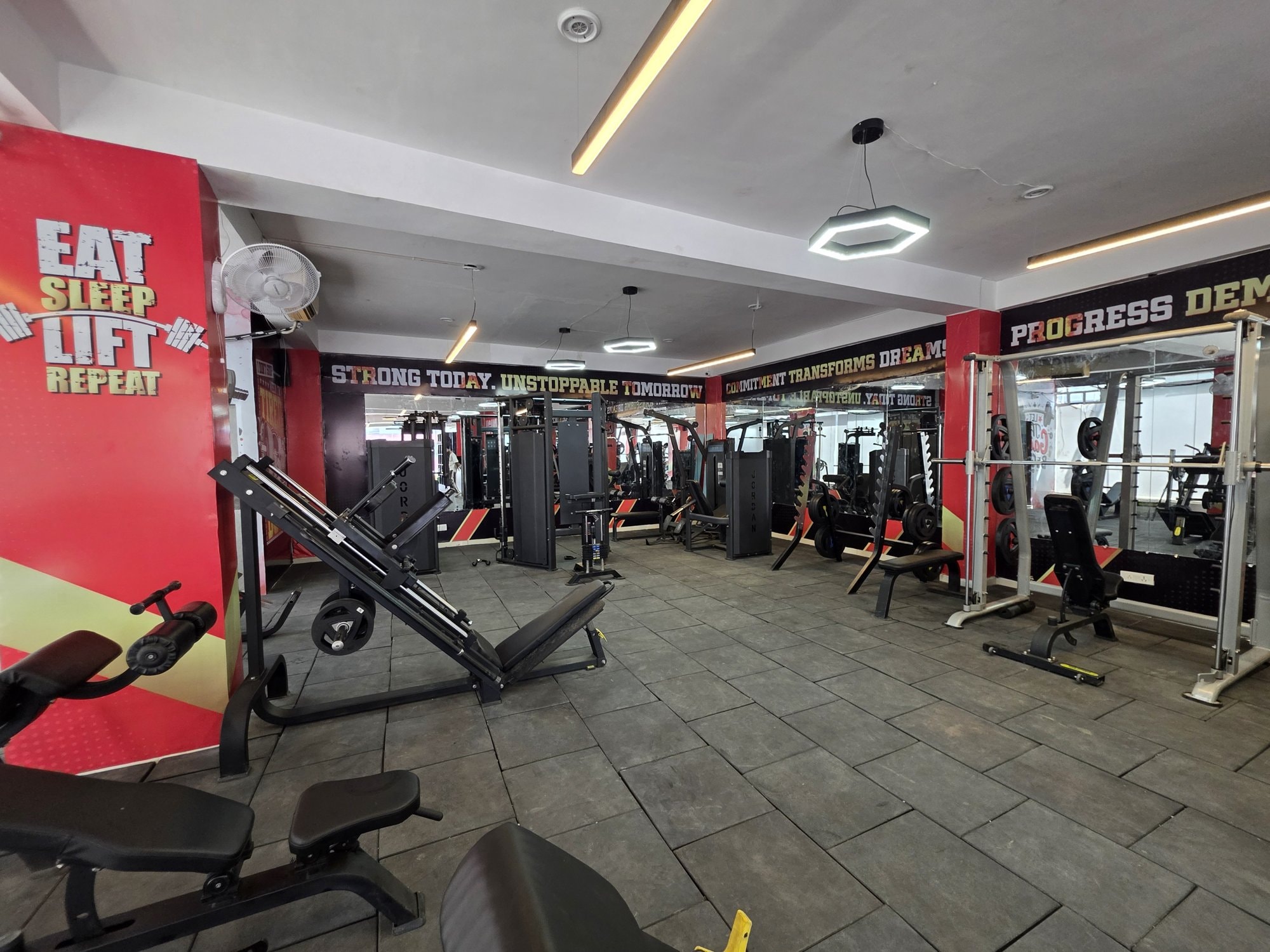
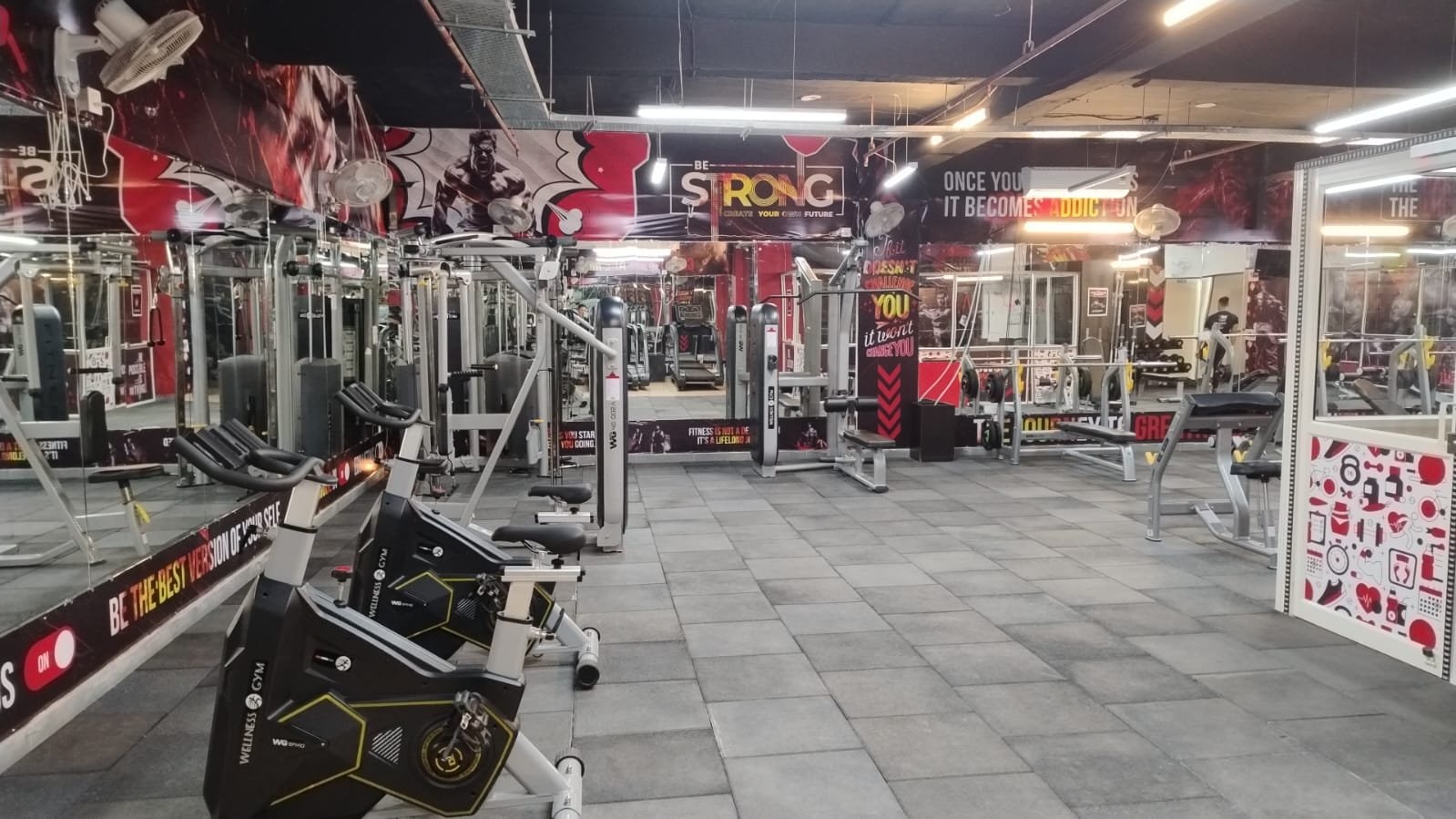
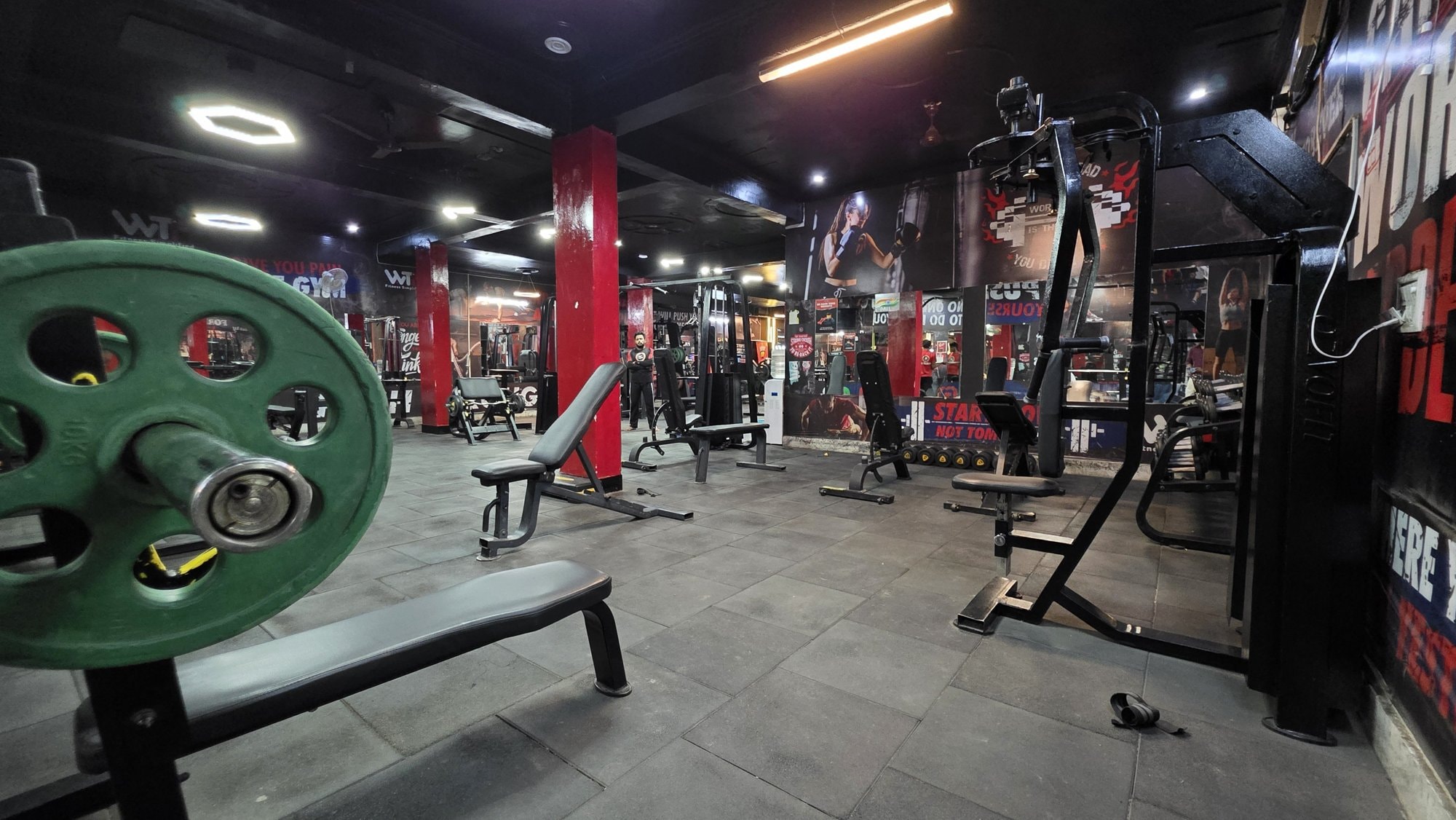
A smith machine gym setup makes sense when you want guided barbell movement, built-in catches, and a compact strength station for squats, presses, lunges and hip thrust work. The right choice depends on whether you need a standalone Smith, a Smith plus rack, or a Smith with cable training. This guide explains the trade-offs, price bands, and buying checks using WTF's catalogue examples.
What a Smith Machine Does
A smith machine uses a bar fixed to guide rails, so the bar travels along a set path instead of moving freely like an Olympic bar. The user rotates or hooks the bar into catches at different heights. This helps lifters set a start and stop point for movements such as squats, incline presses, shoulder presses and split squats.
The guided path is the main reason gym owners add it to a strength zone. Newer lifters often like the controlled feel, while experienced lifters may use it for high-volume accessory work where setup speed matters. Seedhi baat: it is not a replacement for every barbell station, but it is a very useful station when placed correctly.
In WTF's catalogue, the Smith range includes rack-based combinations such as Smith + Power Rack (Counter Balance), model AS029, Smith Machine + Rack, model JN2063A, Smith Machine with Rack (Counter Balance), model JN2063B, and Power Rack + Smith, model RS015. Each of these models is listed as Made in India and with a heavy-duty frame.
The standalone Smith Machine U2063 lists a heavy-duty frame. WTF's range also includes the D602 Power Smith Machine for buyers comparing Power Smith options.
Budget Positioning and Price Bands
For budgeting, use only the list-price bands in the current WTF price guide. The Smith Machine band is ₹1,77,000–₹2,89,000 MRP. If you are comparing a simpler rack station, the Squat Rack band is ₹17,500–₹1,24,000 MRP. These are MRP / list-price bands from our price guide, not per-model selling prices.
The smith machine price can be higher than a basic squat rack because it adds guide rails, a guided bar system, and often rack or cable functionality. However, the better question is not only “What is the price?” It is “Which station earns its floor space in my training mix?” A small personal studio, apartment gym, or home gym may prefer a combo. A larger commercial gym may separate the Smith, power rack, cable station, and benches.
Counter-Balanced vs Non-Counter-Balanced Smith Machines
A counter-balanced Smith uses a balancing mechanism to reduce the starting feel of the bar. This can make the first rep feel more manageable, especially for users training presses, lunges, calf raises or slow technique work. It also helps when a gym has mixed users: beginners, serious lifters, and trainers who need quick exercise changes.
A non-counter-balanced Smith has no balancing assistance, so you lift the full bar weight from the first rep. Some lifters prefer that more direct loading feel. For gym owners, the choice should be based on the audience. If your facility has many first-time members or personal training clients, counter balance can be a strong usability feature. If your users are more barbell-experienced, a rack-combo layout may matter more than the counter balance itself.
In WTF's catalogue, the models that explicitly mention counter balance are Smith Machine with Rack (Counter Balance), model JN2063B and Smith + Power Rack (Counter Balance), model AS029. Do not assume every Smith model is counter-balanced unless the product name or final quote says so.
Vertical vs Angled Bar Path
Smith machines may be designed with either a more vertical bar path or an angled bar path. A vertical path is straightforward for many pressing and squat patterns. An angled path can feel natural for certain squats and presses if the user faces the correct direction and sets the bench properly. Neither is automatically right for every body type.
The catalogue does not specify the bar-path angle for each model, so treat this as a buying check. When shortlisting, confirm the bar path, hook rotation, catch spacing, bench positioning, and whether the path suits your primary exercises. For a serious home buyer, also check whether the motion feels comfortable with the ceiling height and room layout.
- For squats, check whether your natural stance lines up with the guided path.
- For bench press, ensure the bench can sit centrally without the rack uprights blocking setup.
- For shoulder press, check seated and standing clearance.
- For lunges and split squats, confirm that the catches are easy to reach from the start position.
Choosing Between a Smith, Squat Rack and Power Rack
The smith machine vs squat rack decision is really about guided movement versus open barbell movement. A squat rack is simple, space-efficient and useful for squats, presses and pulls when paired with the right bar, plates and bench. A power rack adds a more enclosed lifting station with safety arms or catches, depending on the design. A Smith adds the guided rail system.
| Option | Strong fit | Trade-off |
|---|---|---|
| Smith machine | Guided squats, presses, lunges, accessories | Fixed path, less free-bar movement |
| Squat rack | Open barbell basics, compact strength zones | Needs confident setup and spotting discipline |
| Power rack | Heavier barbell training and more containment | Uses more floor and approach space |
| Smith + rack combo | Mixed users and multi-use rooms | More checks for spacing and attachments |
| Smith + functional trainer | Cable plus guided bar in one station | Needs careful traffic planning |
For basic rack planning, compare WTF's range options such as Squat Rack, model AMV04, Power Rack, model AMV24, and the wider benches and racks range. AMV04 and AMV24 are both listed as Made in India and with a heavy-duty frame. If you are adding pressing movements, pair your shortlist with a suitable gym bench guide so bench height, back-pad angle and rack access are considered together.
Smith Combos: Rack and Functional Trainer Options
A home Smith or a compact studio station often works better as a combination unit. A Smith plus power rack lets users train guided lifts and free-bar rack work in one footprint. A Smith plus functional trainer adds cable exercises such as rows, flys, pulldowns, face pulls and arm work, depending on the attachment setup.
WTF's catalogue lists Functional Trainer + Smith, model E6250, with a 92 kg weight stack on each side and Made in India. It also lists Functional Trainer + Smith + Rack, model RS012, with a 100 kg weight stack on each side and Made in India. These stack details are useful because cable capacity affects how many users can train upper-body pulls, presses and isolation movements on the same station.
For a studio or serious home buyer, a combo can be paisa vasool when floor space is limited. For a busy commercial floor, combos should be planned carefully: one person using the Smith may block rack access, or a cable user may stand where a bench needs to move. If cable training is a major part of the plan, read the cable machine gym guide before finalising the layout.
WTF uses duty tiers to separate use cases; for Smith and rack planning, confirm the quoted model against the ratings guide.
Exercises That Suit a Smith Machine
A Smith machine works well for controlled strength and hypertrophy exercises where a guided path is acceptable. It is especially useful when the user wants to focus on the target muscles without managing bar drift. That does not mean every exercise should move to the Smith; deadlifts, Olympic-style lifts, and many athletic barbell patterns usually need more natural bar movement.
- Lower body: squats, split squats, reverse lunges, calf raises, hip thrust variations.
- Push movements: flat bench press, incline press, shoulder press, close-grip press.
- Pull and accessory work: inverted rows if the setup allows, shrugs, controlled rack pulls where appropriate.
- Beginner-friendly patterns: partial-range squats, assisted movement practice, trainer-led progressions.
If hip thrusts are a key programming requirement, note that WTF's catalogue also includes 3d Smith Hip Thrust, model A609, which is listed as Made in India and with a heavy-duty frame. This is a different type of plate-loaded strength piece, so compare it against your actual exercise menu rather than assuming one Smith station covers every glute-training need.
Buying Checks Before You Order
Before selecting a Smith station, check the details that affect daily use. Some details are not visible in a brochure image, so ask for them in the quote discussion. WTF runs 260+ gyms and sells commercial equipment, so the buying advice is practical.
- Confirm bar feel and whether the model is counter-balanced or not.
- Check catch spacing so short and tall users can start and finish safely.
- Measure footprint including the bench, plates, user approach space and any cable stations.
- Check ceiling height for standing presses and tall users.
- Confirm the frame description and duty tier on the final quote.
- Plan plate storage nearby so users do not carry plates across walkways.
- Match the station with suitable benches, bars and flooring.
For home buyers, also consider noise, floor protection, ventilation, and whether the room allows a bench to slide in and out easily. For gym owners, think about member flow: a Smith near a mirror and plate tree is useful, but it should not block dumbbell traffic or cable users.
If you want to see the equipment range in person, WTF has a showroom at D-27, Sector 112, Noida, UP 201305. For final buying, ask for an itemised equipment quote so the Smith, rack, bench, plates and installation scope are clearly separated.
How to Shortlist for a Gym or Home
For a commercial gym, start with the training zone: beginner strength, serious barbell, personal training, or mixed-use. If the zone already has squat racks and power racks, a dedicated Smith or Smith plus cable station may add variety. If the room has limited space, a Smith plus rack may be more sensible than multiple standalone stations.
For a smith machine for home, prioritise ceiling height, delivery access, bench clearance and the exercises you will actually repeat. A large combo looks attractive, but only if you can load plates, adjust catches and move around it comfortably. If you are researching the overall cost to open a gym rather than equipment selection, use the sister resource on total gym setup planning; this guide stays focused on equipment.