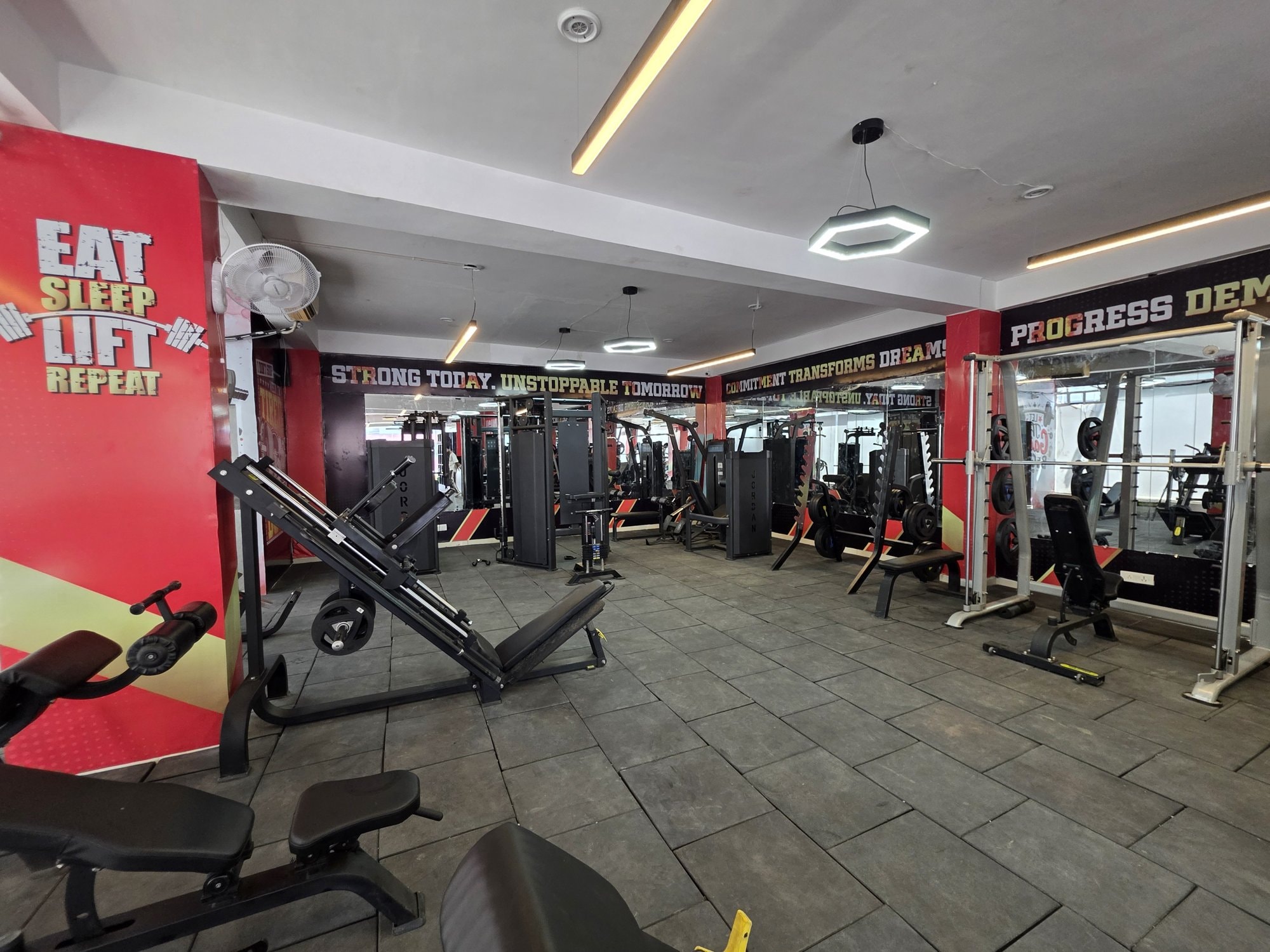
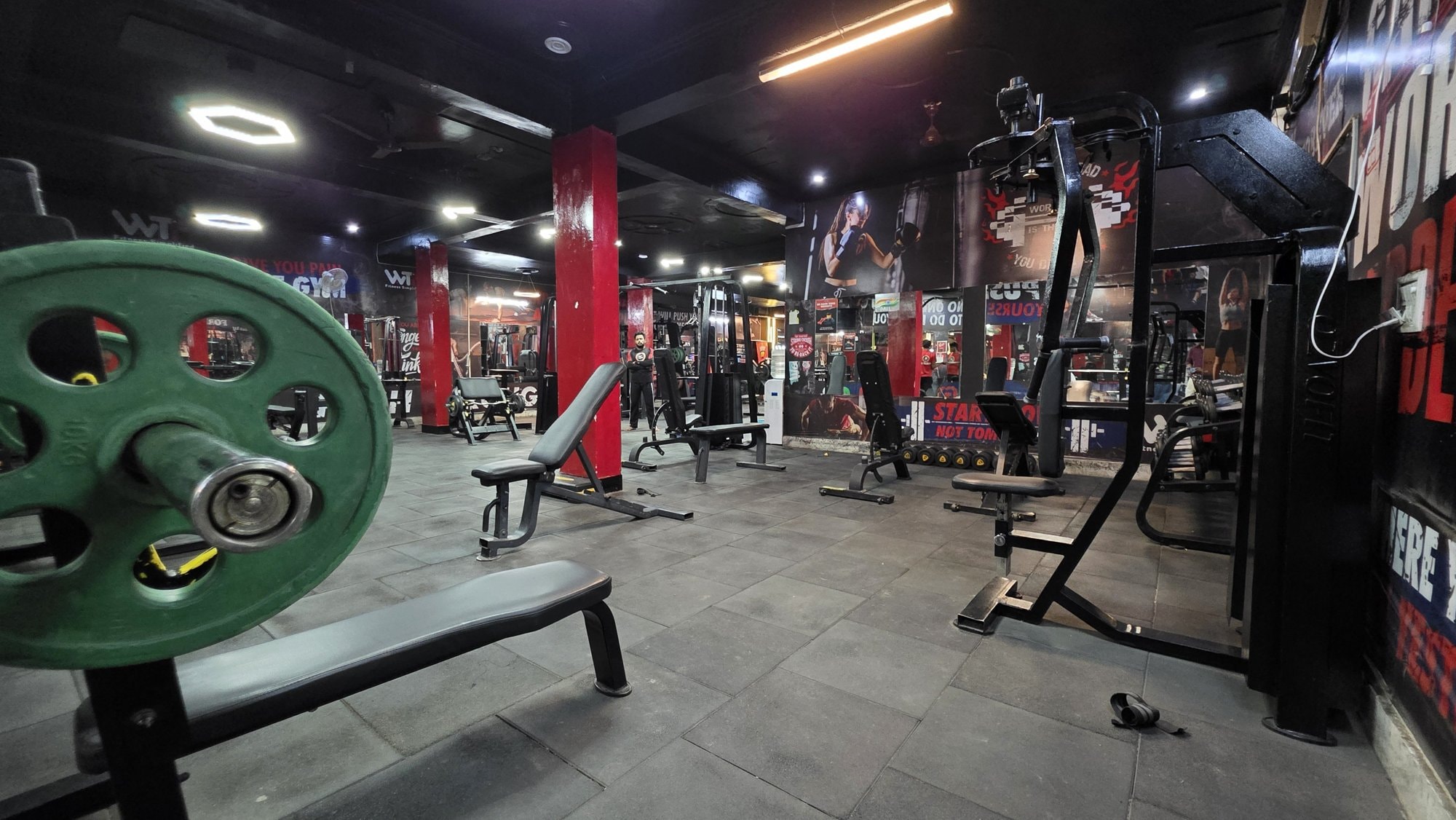
Gym machines should be shortlisted by muscle group first: chest, back, legs, then by selectorized or plate-loaded format. For an Indian gym owner or serious home buyer, the right mix is not about filling space; it is about giving members clear stations for pressing, pulling, squatting, extending and curling. This guide covers machine names, what each trains, what to check before buying and how many to plan.
Gym Machines Names by Muscle Group
Start with movement coverage. A gym chest machine handles pressing or fly movement. A back station usually covers vertical pulling, horizontal rowing or a T-bar pattern. Leg machines in gym planning should cover a heavy press or squat pattern, knee extension, knee flexion and, where space allows, calves and hip abduction.
| Muscle group | Common machine names | What they train |
|---|---|---|
| Chest | Chest press, incline press, pec deck, fly | Pectorals, front delts, triceps support |
| Back | Lat pulldown, seated row, T-bar row, pullover | Lats, mid-back, rear delts, biceps support |
| Legs | Leg press, hack squat, leg extension, leg curl | Quads, hamstrings, glutes depending on pattern |
| Lower leg and hip | Calf, abductor, adductor | Calves, hip abduction and adduction patterns |
WTF uses Core, Pro and Signature duty tiers; for this guide, the important split is selectorized Core pieces versus heavier Signature plate-loaded pieces, with details on the ratings page.
Selectorized vs Plate-Loaded: Choose by Floor Role
Selectorized machines use a weight stack and a pin. They are simple for new users because the load change is quick, the path is guided and the setup is usually clear. WTF selectorized strength examples include Core-duty machines with 100 kg stacks, such as the AMDM-01 Chest Press, AMDM-014 Leg Extension, AMDM-015 Leg Press, AMDM-12 Lat Pull Down and AMDM-04 Seated Row.
Plate-loaded machines use external plates. They suit stronger users, serious strength zones and premium visual zones because loading is visible and progressive. WTF plate-loaded examples include Signature-duty pieces such as AMV01 Iso Lateral Chest Press, AMV10 Leg Press, AMV16 Iso Lateral Front Lat Pulldown, A617 Standing T-Bar Row and A610 Pendulum Squat. Browse the broader selectorized strength range and plate-loaded range when comparing the two styles side by side.
Chest Machines: Press, Fly and Incline Work
A gym chest machine usually fits into one of three roles: flat or straight pressing, inclined pressing, and fly or pec deck work. The chest press machine trains a horizontal press pattern, mainly the pectorals with shoulder and triceps assistance. The AMDM-01 Chest Press is a selectorized Core-duty model measuring 1,390 × 1,300 × 1,530 mm with a 100 kg stack. The A615 Straight Line Chest Press and AMV01 Iso Lateral Chest Press are plate-loaded options.
For upper-chest emphasis, look at incline and super-incline press patterns. The AMV02 Iso Lateral Super Incline Press has a black frame with red arms. Fly movement is different from pressing: it brings the arms across the body and usually needs better shoulder-position control. The AMDM-02A Pec Fly/Rear Delt is a selectorized Core-duty model measuring 1,460 × 1,305 × 2,030 mm with a 100 kg stack. The A612 Incline Fly is a plate-loaded model with a heavy-duty frame.
- For a chest press machine, check seat height adjustment so users can align handles with the mid-chest without shrugging.
- Check the press arm path: it should feel stable through the start and finish, not awkward at lockout.
- For pec fly or rear-delt machines, check arm-start adjustment because shoulder comfort changes widely across users.
- For plate-loaded chest presses, check plate storage, loading height and whether both arms move smoothly.
Back Machines: Pull Down, Row, T-Bar and Pullover
When someone asks for a back machine gym owners usually need at least two movement categories: vertical pulling and horizontal rowing. The lat pulldown machine trains a vertical pull pattern, mainly lats with biceps and upper-back assistance. The AMDM-12 Lat Pull Down is a selectorized Core-duty model measuring 1,340 × 1,365 × 2,290 mm with a 100 kg stack. The AMV16 Iso Lateral Front Lat Pulldown is a plate-loaded alternative with a black frame and red arms.
Rows fill the horizontal-pull slot. The AMDM-04 Seated Row is selectorized Core-duty, measuring 1,590 × 910 × 1,530 mm with a 100 kg stack. The AMDM-12A Seated Horizontal Pulley is also selectorized Core-duty, measuring 1,790 × 1,020 × 1,530 mm with a 100 kg stack. For plate-loaded rows, the A611 Incline Linear Row, A617 Standing T-Bar Row, AMV07 Iso Lateral Low Row and AMV14 Plate Loaded Iso Lateral Row give different torso and arm paths.
WTF's catalogue lists lat pulldown, seated row, horizontal pulley, incline linear row, T-bar row, low row and front lat pulldown options. For a pullover pattern, the AMV20 Pull Over is a Signature-duty plate-loaded model. Check entry height, elbow pad placement and shoulder comfort.
- For a lat pulldown, check thigh-pad adjustment and whether shorter and taller users can sit firmly under the pad.
- For seated rows, check chest-pad or foot support position, handle reach and cable path.
- For a T-bar row, check loading access and whether the handle path lets users keep a strong hip hinge.
- For all back machines, check grip options because small handle changes can change the training feel a lot.
Leg Machines: Press, Squat, Curl, Extension and Hip
For leg machines, gym buyers should build from big patterns to isolation patterns. A leg press machine is a major lower-body station because it trains a press pattern using quads and glutes, with hamstrings assisting depending on foot placement and machine angle. The AMDM-015 Leg Press is a selectorized Core-duty model measuring 1,985 × 1,035 × 1,530 mm with a 100 kg stack. The AMV10 Leg Press and A616 Vertical Leg Press are plate-loaded options, both listed with a heavy-duty frame.
Squat-pattern machines add variety without needing a barbell setup for every user. The A601 Power Squat, A607 Belt Squat and A610 Pendulum Squat are plate-loaded models listed with a heavy-duty frame. The AMV12 V-Squat has a black frame with red arms. The E3057 Hack Squat and HSLP41 Leg Press / Hack Squat are Signature-duty plate-loaded models with a heavy-duty frame.
Isolation machines matter because they reduce waiting around the heavy stations. The AMDM-014 Leg Extension is selectorized Core-duty, measuring 1,425 × 1,035 × 1,530 mm with a 100 kg stack. The AMDM-013 Seated Leg Curl and AMDM-013A Horizontal Leg Curl are selectorized Core-duty models, each with a 100 kg stack. The AMV03 Iso Lateral Kneeling Leg Curl has a black frame with red arms. The AMDM-017 Calf Extension is selectorized Core-duty with a 100 kg stack, while A604 Multi Abductor is a plate-loaded model with a heavy-duty frame.
- Check the pivot: the knee pad or movement arm should match the user’s joint line as closely as the design allows.
- Check adjustment range: seat, back pad, roller pad and start position decide whether the machine fits more users.
- Check stack or loading: selectorized stacks should change cleanly; plate-loaded horns should be easy to reach.
- Check entry and exit: leg press and squat machines must not force users into awkward twisting under load.
MRP Bands to Keep in Your Shortlist
Use prices as shortlist filters, not as the only deciding factor. The bands below are MRP / list-price bands from our price guide. Final buying should still compare duty tier, movement path, adjustment range, stack or loading method, and floor fit.
| Machine | MRP / list-price band | Use it for |
|---|---|---|
| Chest press price guide | ₹1,35,500–₹2,00,500 MRP | Main chest press |
| Pec deck and fly price guide | ₹1,92,000–₹2,36,000 MRP | Chest fly and rear-delt work |
| Lat pulldown price guide | ₹1,33,000–₹1,89,000 MRP | Vertical pulling |
| Seated row price guide | ₹1,46,000–₹1,83,000 MRP | Horizontal pulling |
| Leg press price guide | ₹1,71,000–₹2,30,000 MRP | Heavy lower-body press |
| Hack squat price guide | ₹2,00,500–₹2,30,000 MRP | Squat-pattern comparison |
| Leg extension price guide | ₹1,71,000–₹2,00,500 MRP | Quad isolation |
| Leg curl price guide | ₹1,71,000–₹1,96,000 MRP | Hamstring isolation |
How Many Machines a Gym Floor Needs
Do not start with a fixed member formula. Start with likely queues by movement. Every serious floor should first cover one chest press, one chest fly or pec deck, one lat pulldown, one row, one leg press, one leg extension and one leg curl. Add calf and abductor work when lower-body space is not already blocked by the larger machines.
As active membership rises, duplicate bottleneck movements before buying niche variations. In many gyms, chest press and lat pulldown queue first, so watch those queues before duplicating calf or abductor stations. For legs, a second heavy pattern can be more useful than another isolation station: for example, adding a squat-pattern machine beside a leg press gives users a different loading style.
For compact premium home gyms, choose fewer machines with clearer roles. A selectorized chest press, a lat pulldown or row, and a leg press or leg extension/leg curl combination may be easier to use than a crowded room of overlapping equipment. For commercial floors, separate beginner-friendly selectorized stations from heavier plate-loaded zones so users are not crossing paths with plates.
WTF delivers and installs, provides a full GST invoice, and can share an itemised equipment quote within 24 hours. Buyers who want to see the equipment range in person can visit the showroom at D-27, Sector 112, Noida, UP 201305.