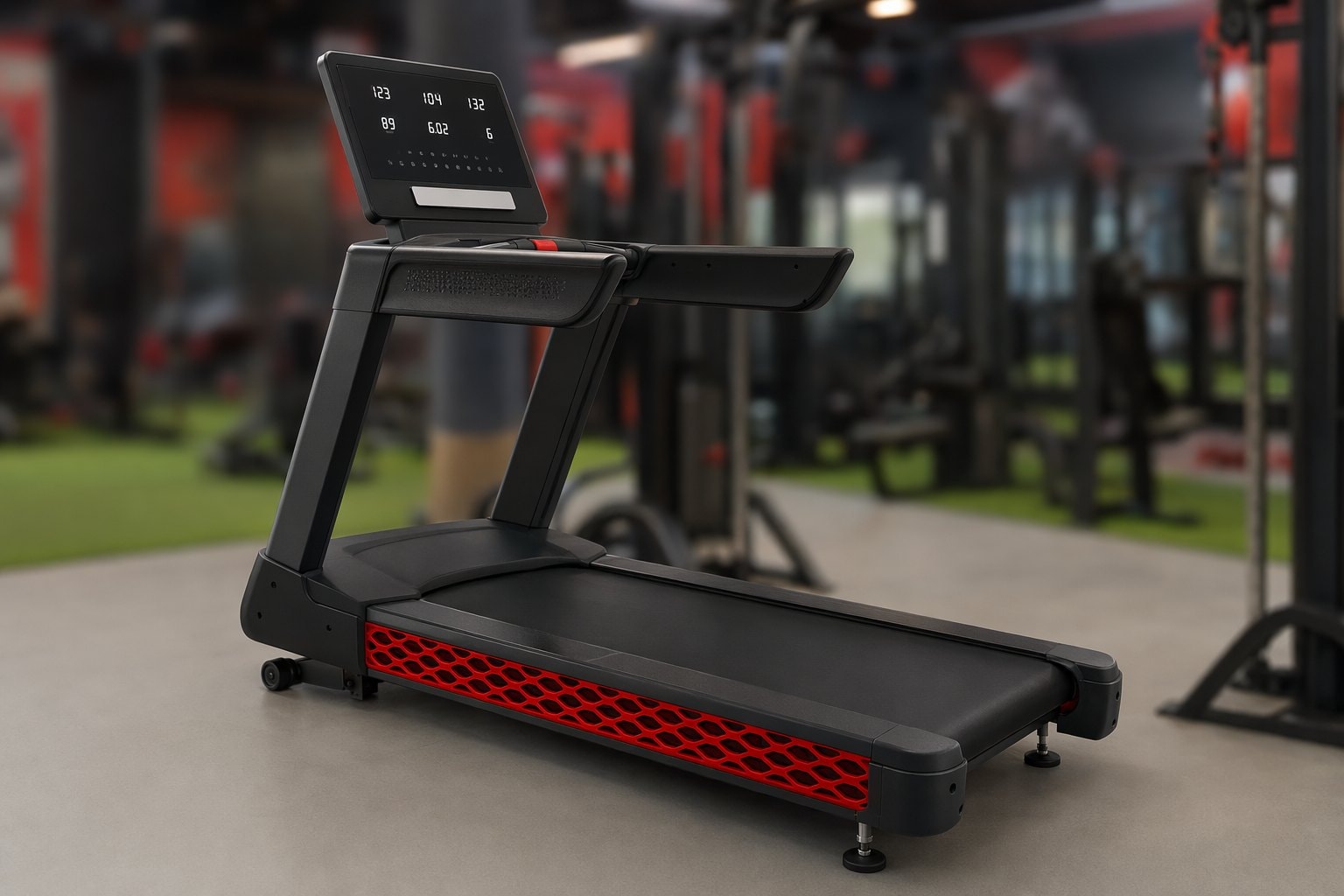
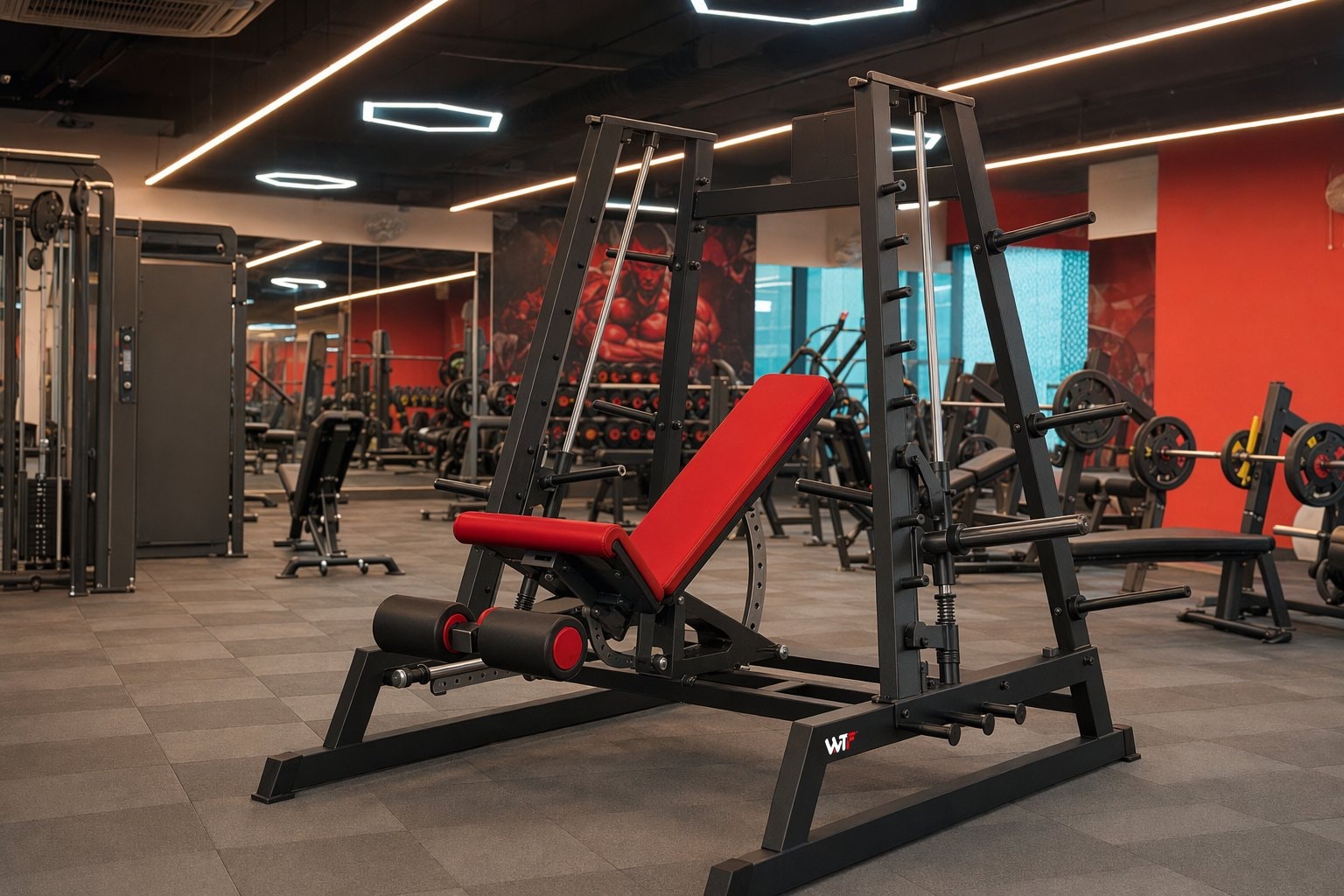
How to store gym equipment starts with one rule: keep weight off floors, walkways clear, and moving parts protected. For Indian homes, garages, school gym storage rooms and small studios, that means racks for dumbbells and plates, vertical or wall storage for accessories, dry mat storage, and careful moving plans for heavy machines.
Start With Zones, Not Random Corners
A tidy gym is not only nicer to look at; it is easier to train in and safer to move around. Divide the area into zones before you buy a home gym equipment organizer: free weights, bars, plates, mats, bands and attachments, cardio, and cleaning space. Even a small room becomes workable when every item has a fixed parking place.
For home gym organization, avoid stacking iron, handles and mats into one mixed pile. The pile always grows outward, catches dust, and makes the next workout slower. Seedhi baat: if a weight has to be lifted twice before you can use it, the storage plan is wrong.
WTF runs 260+ gyms and sells commercial-duty equipment from its catalogue. The useful buying lesson is simple: storage must match the weight and frequency of use. A light accessory hook is fine for bands; it is not a place for loaded bars, plates or benches.
| Item | Storage Choice | Avoid |
|---|---|---|
| Dumbbells | Tiered rack | Floor line-up in walkways |
| Weight plates | Plate tree or rack pegs | Leaning stacks on walls |
| Bars | Vertical or horizontal bar holder | Resting bars on tiles |
| Mats | Dry rack or upright roll space | Damp folded pile |
| Bands and handles | Wall hooks or bins | Mixed storage with plates |
| Bench | Clear parking bay | Blocking doors or sockets |
Dumbbells, Plates And Bars Need Dedicated Racks
Dumbbells are the first items that turn a clean room into clutter. A proper rack keeps handles visible, reduces bending, protects edges from unnecessary knocks, and keeps pairs together. WTF lists dumbbell rack options in the ₹10,500–₹47,000 MRP band in our dumbbell rack price guide. Use that band only as a list-price guide while comparing formats.
The WTF catalogue includes the DR01 Dumbbell Rack 2 Tier, with a heavy-duty commercial steel frame and Made In India specification. It also includes the DR03 Dumbbell Rack 3 Tier, listed with a Heavy Duty Frame and Made In India specification. A lower, wider rack is usually easier to access in a home room; a taller tiered rack helps when floor area is tight.
Weight plates also need a home. Plates left on the floor collect dust at the rim, chip flooring when dragged, and create trip points near racks. WTF lists weight plates in the ₹271–₹295 per kg MRP band in the weight plates price guide. Keep plates near the station where they are loaded most often, but not so close that lifters step over them.
For bars, choose a holder that supports the sleeve and shaft without forcing the bar to roll. If your rack has storage pegs, load plates evenly and keep walkways open. The Crossfit Rig in the WTF catalogue includes a plate rack, T Bar Holder and accessories 2-layer rack in its listed name, with commercial-grade materials and Made In India specification.
Mat Storage: Keep Them Dry, Flat Or Properly Rolled
Gym mat storage is mostly about moisture and shape. Mats used for stretching, yoga or floor work should be dry before they go into any gym mat organizer. Damp folding traps smell and can make the mat surface unpleasant. If a mat is designed to roll, roll it loosely and store it upright or on a rack; if it is a tile or slab, keep it flat and supported.
Do not park dumbbells, plates or bench legs permanently on soft mats unless the mat is meant for that load. Point pressure can leave dents or tears. For a garage gym storage plan, keep lifting areas, cardio areas and mat areas separate. A mat rack or wall rail can work well for light exercise mats, while heavier floor tiles should stay in their training area.
For a school gym storage room, mats need labels or visible sorting: activity mats in one stack, floor-protection tiles in another, and cleaning supplies away from training gear. Avoid over-high stacks that students or staff need to pull from the middle. If space is shared with sports equipment, gym mats should not sit below wet balls, cones or outdoor items.
Garage Gym And Small-Room Organization
Garage gym organization has a different problem from a bedroom home gym: dust, vehicle movement, tools, and seasonal dampness. Keep training equipment away from direct water entry points, paint cans, sharp tools and garden chemicals. If a car also uses the space, mark a clear boundary for gym equipment and leave a non-negotiable walking path.
In compact homes, the right home gym organiser is often a combination, not a single rack. Use a dumbbell rack for hand weights, wall hooks for bands, a narrow basket for collars and handles, and a fixed corner for mats. If you are still designing the room, our small-space equipment guide helps you decide what deserves floor space and what should be wall-mounted.
Benches are tricky because many buyers search for a gym bench with storage. WTF does not list a bench with built-in storage. It does list dedicated storage such as the Plate Tree Rack RP07 and Rod Stand RP02, plus rack equipment such as the Half Rack with Deadlift Platform, specified with a Heavy Duty Frame and Made In India detail, and the wider benches and racks category for strength-area planning.
- Keep daily-use dumbbells at hand height where possible, not under other gear.
- Store clips, collars and handles in one labelled tray so they do not disappear.
- Leave rack uprights, treadmill sides and bench paths clear enough for normal movement.
- Keep floor-cleaning access open; dust under weights becomes hard to remove later.
- Use wall storage only where the wall and fasteners are suitable for the load.
How To Move Home Gym Equipment Safely
Before moving, empty the equipment. Remove plates, dumbbells, loose handles, collars, pins and bottles from every machine or rack. Tie or pack accessories separately. Photograph the setup from a few angles before disassembly so reassembly is easier, especially for cable paths and rack attachments.
For home equipment, disassemble what the manual permits: spotter arms, J-hooks, storage pegs, attachments and removable benches. Keep bolts from each section in labelled packets. Do not force painted frame parts through narrow doors; wrapping edges and protecting corners is simpler than touching up chips later.
A gym equipment moving company should understand load paths, stair protection, doorway clearance and levelling after installation. For heavy commercial machines, trained movers are the safer choice because frames, stacks and decks can shift if dragged or tilted wrongly. WTF delivers and installs new equipment purchases, but relocation should be planned with suitable movers rather than treated like ordinary furniture shifting.
If you are planning a new home room rather than shifting an old one, the home gym setup guide can help you reduce movement later. Final placement matters: once a rack, treadmill or cable station is levelled and settled, frequent shifting is inconvenient and can mark floors.
Treadmills, Racks And Stack Machines: Moving Notes
To move a home treadmill, first check whether the model folds and whether it has transport locks. Never assume all treadmills fold. Lock what is meant to be locked, unplug properly, secure the console area, and keep the running deck protected from scraping. If you are comparing sizes for a future purchase, read the treadmill size guide before allocating space.
To move a commercial treadmill, do not lift by the console or handrails unless the manufacturer’s instructions allow it. The deck and motor area are heavy, and the machine may need careful tilting, stair protection and levelling at the new location. A trained crew should handle the move; paisa vasool equipment deserves careful handling.
For selectorized machines, pin the weight stack only as instructed and secure moving parts so they do not swing. Do not drag the machine across tiles or rubber flooring. For racks, remove loose attachments and plate loads first. The Power Rack AMV24 is listed with a Heavy Duty Frame and Made In India specification; moving any heavy rack should be done without attached weights.
Combination frames need extra care because several training functions meet in one structure. The Smith + Power Rack AS029 is listed as a Counter Balance model with a Heavy Duty Frame and Made In India specification. Keep guide rods, hooks and moving assemblies protected during any move, and re-check level and bolt tightness after placement.
Pick Storage By Duty Tier And Usage
WTF uses duty tiers to make equipment selection clearer. Storage is part of that selection because a rack that is fine for one person at home may not suit a busy free-weight zone. Match the organizer to the load, the number of daily users, and how often items are re-racked.
Core — full-commercial duty: cardio, selectorized, plate-loaded and functional lines rated for 16hr+/day floors, 7 days a week; 3mm steel main frames; continuous-duty AC motors on cardio (up to 5HP continuous). Pro — performance/club duty for the free-weight zone: dumbbells, plates, bars, benches and racks built for thousands of drops and re-racks a week. Signature — flagship strength pieces, heaviest builds in the range, for the zones that sell memberships on a walk-through.
Use the tiers as a filter, then verify footprint, loading habits and storage needs. The Squat Rack AMV04 is a Signature-tier model listed with a Heavy Duty Frame and Made In India specification. Functional layouts can also reduce separate accessory clutter when rack features are planned from the start.
Buying And Planning With WTF
Storage should be included in the first equipment quote, not added after the room becomes messy. When you list your dumbbells, plates, bars, mats, benches and machines together, it becomes easier to choose racks, wall storage and floor protection in one plan.
WTF provides a full GST invoice and an itemised quote within 24 hours. WTF also delivers and installs new equipment purchases. Buyers who want to see machines in person can visit the WTF showroom at D-27, Sector 112, Noida, UP 201305; use the Noida showroom directions page for location details.
If your question is about opening a gym business, franchise planning or staffing, that belongs on the sister site for business topics; this guide stays focused on equipment storage, safe movement and layout decisions. For equipment, the cleanest plan is simple: rack the weight, dry the mats, protect the floor, and move heavy machines with proper help.