Home gym vs gym membership is not a single-winner decision; it depends on space, training style, family use, coaching needs and how regularly you train. If you value privacy and time saved, build at home; if you need coaching, variety and community, join a gym. This guide compares both options using WTF catalogue examples, MRP bands from our price guides and practical operator thinking from a team connected to 260+ gyms.
The Quick Decision Framework
Seedhi baat: choose a home gym if your training is predictable, your space is stable and you will use the equipment without needing daily supervision. Choose a gym membership if you want instructor attention, a larger equipment mix, group energy or the freedom to change workouts without buying more machines.
The home gym vs gym question is often framed only as money. That is incomplete. A home setup saves travel time and can serve more than one person at home, but you must plan space, loading, ventilation, flooring, noise and upkeep. A commercial gym gives variety and coaching, but you follow its location, crowd patterns and operating rules.
For a deeper setup checklist, use the home gym planning guide before ordering equipment. If you already know the space and want item-by-item ideas, the home gym equipment guide is the better next step.
| Factor | Home gym suits you when | Gym membership suits you when |
|---|---|---|
| Training habit | You follow a fixed routine | You need external push |
| Equipment need | Core strength and cardio are enough | You want many machines |
| Space | You can dedicate a safe zone | Home space is tight |
| Coaching | You know technique basics | You want regular guidance |
| Family use | Multiple people will train | Mostly solo training |
Cost: Compare Real Quotes, Not Assumptions
Is home gym cheaper than membership? Sometimes, but not automatically. Do not compare a random equipment wish list with a guessed gym fee. Instead, write down your actual membership option and compare it with a real equipment quote, including floor protection, plates, storage, delivery, installation and GST.
From WTF price guides, typical home-gym building blocks sit in these MRP/list-price bands: adjustable benches are listed at ₹16,000–₹65,000 MRP, dumbbells at ₹295–₹369 per kg MRP, squat racks at ₹17,500–₹1,24,000 MRP, and commercial treadmills at ₹48,500–₹2,59,500 MRP. These bands are useful for budgeting, not for guessing a final cart.
A serious home buyer can keep the starting kit simple: dumbbells, a bench, a rack if barbell training is required, and cardio only if it will be used consistently. The temptation is to buy everything at once. Better approach: build the setup around movements you already perform, then add equipment only when it solves a real training gap.
Equipment Range: Home Gym vs Commercial Gym
A commercial gym is hard to match for variety. You get multiple cardio options, selectorized machines, plate-loaded stations, cable zones, racks and recovery or mobility areas depending on the facility. If your training changes often, or you like machines for every muscle group, a membership gives you that breadth without turning your house into a facility.
A home gym wins when you are clear about your movement menu. For strength, the Adjustable Dumbbells model ADJUSTABLE-DUMBBELLS are listed with commercial-grade materials and Made In India construction. For fixed dumbbell pairs, Hexagon Dumbbells model DB01 list sizes from 2.5 to 40 kg, while other catalogue dumbbell lines extend differently.
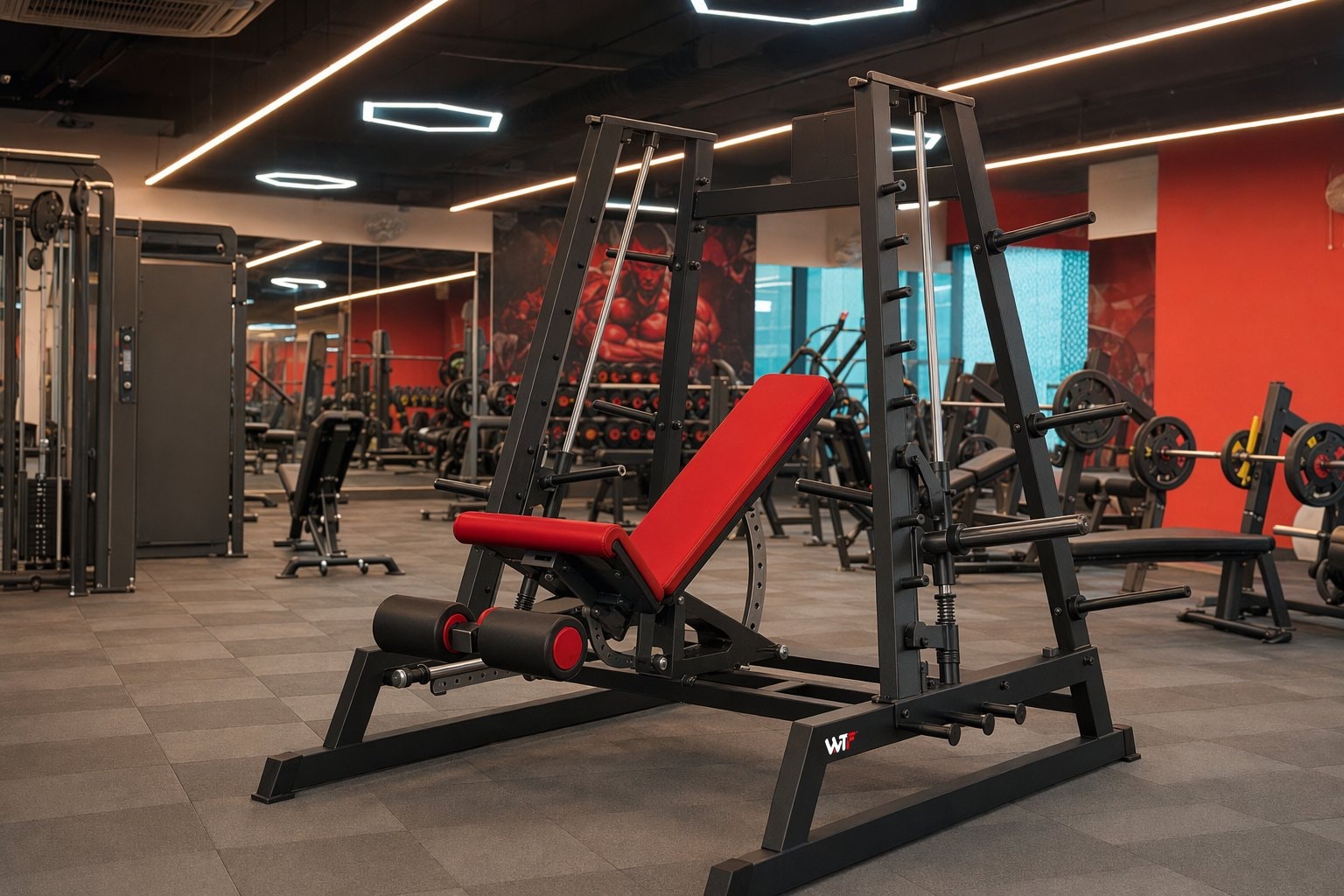
For barbell work, the Squat Rack model AMV04 lists a heavy duty frame and Made In India construction. Pairing a rack with an adjustable bench can cover squats, presses, rows, lunges and accessory movements if your ceiling height, floor strength and lifting style allow it.
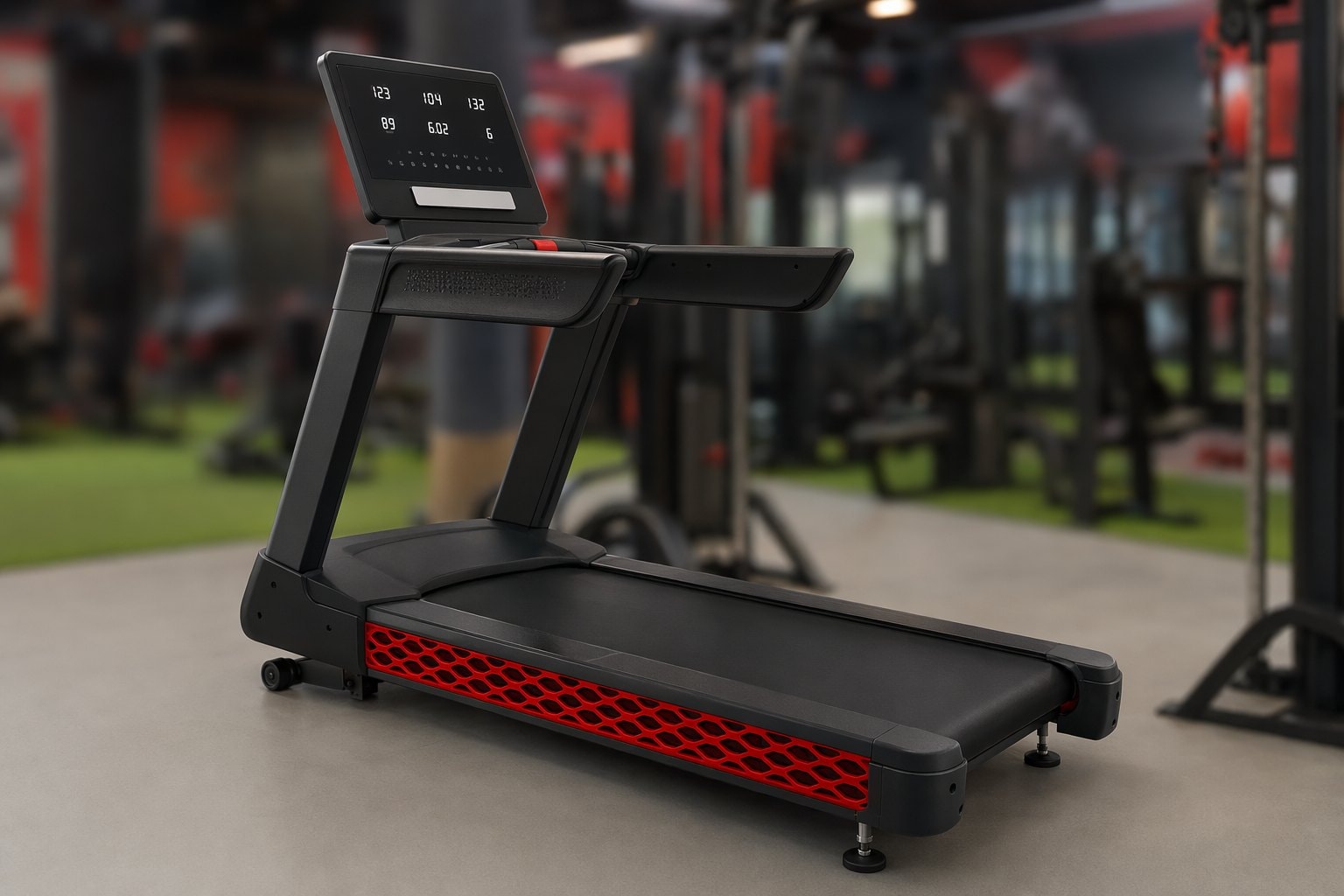
Cardio is where buyers often overspend. If walking and running are central to your routine, a commercial treadmill may make sense. The Commercial Motorized Treadmill model BEAST lists an AC MOTOR 8 HP Peak (4HP Continuous), 60x153cm running area, 0-20% auto incline and 200Kgs maximum user weight. Keep headroom between your body weight and any maximum user-weight rating; do not choose a machine rated exactly at your weight.
If you prefer self-powered running, the Curve Non-Motorized Treadmill model CURVE lists nylon belt technology, six level of resistance, an innovative curved deck and 150kg max user weight. The catalogue also includes a spin option: Commercial Spin Bike model 5917, with a 25Kgs fly wheel, Poly - V Belt driven system and 180Kgs max user weight.
Space, Noise and Home Practicality
Garage gym vs gym membership is mostly a space question. A garage, spare room or covered terrace can work if it has safe flooring, enough ventilation, clear movement space and protection from moisture. Apartment buyers must also think about sound, vibration and moving heavy pieces through lifts, stairs and doorways.
Avoid designing only around the equipment footprint. You also need loading space for plates, room to step back from a rack, clearance around cardio, and storage that keeps the floor safe. A compact home gym can feel better than an overcrowded one because you move without constantly shifting equipment.
For home use cases, browse the home gym page and shortlist only the pieces that match your room. If you are comparing construction categories, the commercial vs home gym equipment guide explains where heavier-duty equipment makes sense and where it may be unnecessary for a single-household setup.
Motivation, Coaching and Safety
Is home gym better than gym? Only if you train consistently without the environment of a club. Many people train harder around other members, scheduled classes or a coach. Others prefer privacy, no commute and no waiting. Your personality matters as much as your budget.
Technique is the serious point. A home gym does not correct your squat depth, brace, shoulder position or running mechanics. If you are new to lifting, returning after a long gap or managing movement limitations, a commercial gym with coaching can be the more sensible first step.
Home buyers should keep the first setup boring and useful: stable benching, progressive dumbbells, safe rack work if needed, and cardio that suits the user. Do not buy complex equipment just because it looks professional. Paisa vasool comes from repeated use, not from a crowded room.
Duty Tiers and What They Mean for Buyers
WTF uses duty tiers to separate how equipment is positioned. Core — full-commercial duty: cardio, selectorized, plate-loaded and functional lines rated for 16hr+/day floors, 7 days a week; 3mm steel main frames; continuous-duty AC motors on cardio (up to 5HP continuous).
Pro — performance/club duty for the free-weight zone: dumbbells, plates, bars, benches and racks built for thousands of drops and re-racks a week. Signature — flagship strength pieces, heaviest builds in the range, for the zones that sell memberships on a walk-through.
For a home gym, these tiers help you avoid two mistakes: buying too light for repeated serious use, or buying more duty than your training requires. For a commercial gym owner, the same tier language helps plan which zones need heavier builds and which pieces simply need to be durable and easy to operate.
Resale, Upkeep and the Hybrid Option
Resale should not be the reason to build a home gym. It can help later, but demand, condition, brand familiarity, transport difficulty and missing accessories all affect resale. Upkeep also matters: bolts, upholstery, belts, flooring, cleaning and safe storage need attention even when equipment is at home.
The hybrid route is often the most practical answer: keep a basic home kit for busy days and take a membership for coaching, machines and heavier variety. This works especially well when travel time is the main barrier but you still enjoy a commercial gym environment.
If you want to see machines before deciding, WTF has a showroom at D-27, Sector 112, Noida, UP 201305, where buyers can see machines in person. You can also request an itemised equipment quote after sharing your space, training style and shortlist.