Elliptical vs treadmill is not a single-winner comparison: choose a treadmill for walking, running and incline work, and choose an elliptical for lower-impact cardio with arm involvement. For Indian flats, home gyms and commercial floors, the right answer depends on joints, ceiling height, noise tolerance, power, user weight and how many different people will use the machine.
Quick Decision: Treadmill vs Elliptical
If your main goal is running-specific training, the treadmill is the more direct tool because the movement is walking, jogging or running on a belt. If the goal is steady cardio with less landing impact, an elliptical cross trainer usually feels easier on knees, ankles and hips because the feet stay on the pedals.
For gym owners, the answer is rarely “cross trainer or treadmill” in isolation. A balanced cardio zone normally needs both: treadmills for members who walk and run, and ellipticals for users who want a lower-impact option with moving handles. Serious home buyers can be more selective: pick the machine that matches the exercise you will repeat consistently.
| User type | Usually choose | Why |
|---|---|---|
| Runner or walker | Treadmill | Specific to walking, jogging and running |
| Knee-sensitive user | Elliptical | Lower landing impact than running |
| Heavy user | Check rating with headroom | Do not buy at the exact user-weight limit |
| Family home | Elliptical or treadmill | Choose by noise, space and who will use it |
| Commercial gym | Both | Different members prefer different cardio styles |
Impact, Joints and Exercise Feel
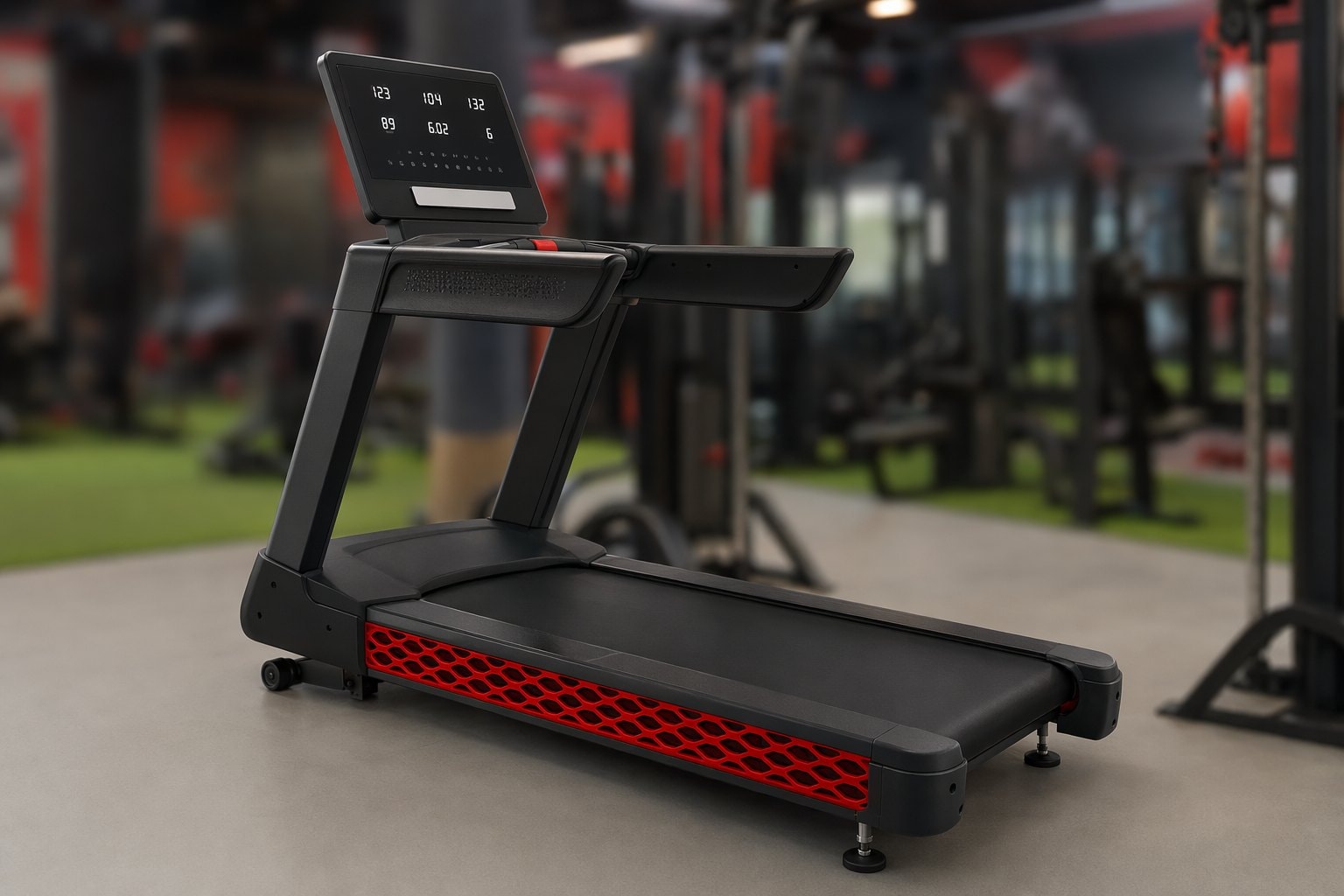
The biggest difference in an elliptical cross trainer vs treadmill comparison is impact. On a treadmill, each step lands on the belt. Cushioning can make the feel more comfortable than hard outdoor surfaces, but running is still a repeated landing activity. WTF treadmill models such as the Commercial Motorized Treadmill BEAST and Commercial Motorized Treadmill DL800 list an Innovative Cushioning System and Heavy Duty Deck.
On an elliptical, the foot stays on the pedal through the movement. That makes it a useful choice for people who want cardio without the same stepping impact. It is not automatically easy; resistance, stride rhythm and posture still matter. The Commercial Elliptical Cross Trainer AT-666 lists a 21 inches stride, 32 resistance levels and a 200Kgs max user weight, while the Commercial Elliptical Cross Trainer M8809EL lists electro magnetic resistance and a 200Kgs max user weight.
For buyers asking “is elliptical better than treadmill,” the honest answer is: better for lower-impact cardio, not better for running practice. If you are training for a run, treadmill movement is closer to the task. If you dislike impact or want a smoother cardio feel, the elliptical may keep you more consistent.
Fat Loss and Cardio Results
Elliptical vs treadmill for fat loss is often framed too simply. Fat loss depends on regular training, food intake, effort, duration, sleep and recovery. A treadmill can feel harder because walking fast, running and incline work are demanding. An elliptical can also be demanding if you use enough resistance and maintain a strong pace instead of just cruising.
When someone asks “cross trainer or treadmill which is better for weight loss,” the practical answer is: the machine you will use properly and repeatedly. A treadmill gives natural walking and running progression. An elliptical adds arm handles and resistance, which can involve more of the body when used actively. Neither machine creates results by standing on it and moving casually.
- Choose a treadmill if incline walking, running intervals or race-style training motivates you.
- Choose an elliptical if lower-impact rhythm, resistance levels and moving handles keep you engaged.
- For a mixed gym floor, offer both so members can rotate between impact and lower-impact cardio.
- For a home, choose the machine that fits your room and noise limits before chasing intensity.
Space, Ceiling, Noise and Power in Indian Homes
In Indian apartments, the treadmill vs cross trainer decision often comes down to room fit. Treadmills are long and need clearance around the belt. The BEAST model lists dimensions of 230x94x173cm, and the DL800 lists 238x98x170cm. Ellipticals can also be large: the AT-666 lists dimensions of 1920*910*1820*mm, while the M8809EL lists 2210*730*1635*mm.
Ceiling height matters more on an elliptical because the user stands on pedals and moves through an elevated stride. Do not judge only by product height; allow space for the tallest user’s head at the top of the motion. Treadmills also need overhead comfort, especially for running posture, but the user is not lifted by pedal travel in the same way.
Noise is different too. A treadmill creates belt sound and footfall, which can travel through apartment floors. An elliptical has less foot strike, but linkages, bearings and pedal movement can still make sound if the unit is poorly placed or not maintained. For flats, a stable floor position and sensible training hours matter.
Power is another difference. Motorised treadmills need electrical supply for the motor and console. Many ellipticals also use powered displays or resistance systems, while the AT-666 lists a self power generating 250W flywheel. WTF also lists non-motorised treadmill options such as the Curve Non-Motorized Treadmill CURVE, which uses an innovative curved deck and six levels of resistance.
Maintenance Load: Belt and Deck vs Linkages
Maintenance is not a reason to avoid either machine, but the wear points differ. A treadmill has a belt, deck, rollers and motorised drive system on motorised models. These parts must stay aligned, clean and suitable for the way the machine is used. A non-motorised curve treadmill removes the motor from the equation, but the belt and deck system still need attention.
An elliptical has pedal arms, bearings, linkages, resistance components and handles. It avoids repeated footfall on a moving belt, but its moving joints still need smooth operation. In a commercial setting, poor placement, uneven flooring and careless use can make either machine feel rough sooner than expected.
Commercial Floor Mix for Gym Owners
WTF runs 260+ gyms, so the buying advice is built around practical floor planning rather than a single-machine bias. For a commercial cardio zone, treadmills are usually expected because walking and running are familiar to almost every member. Ellipticals add variety for members who want a smoother motion, arm involvement and resistance-based cardio.
The relevant duty tier here is Core — full-commercial duty: cardio, selectorized, plate-loaded and functional lines rated for 16hr+/day floors, 7 days a week; 3mm steel main frames; continuous-duty AC motors on cardio (up to 5HP continuous). The listed treadmills and ellipticals in this guide are Core duty models.
If you are planning a broader cardio zone, start with the cardio equipment category and then shortlist by user mix. Treadmills suit walking, jogging, running and incline demand. Ellipticals suit users who want low-impact endurance. If you are also comparing cycles, this treadmill vs exercise bike guide covers the bike angle separately.
Opening a gym business, franchise structure and business planning are covered on a sister site; this equipment guide stays focused on machine choice, while that topic can be explored through the gym setup route.
Model Shortlist: What the Catalogue Actually Lists
For treadmills, WTF lists motorised commercial models with AC motors and auto incline, plus curve non-motorised options. The Motorized Treadmill model 22 lists AC MOTOR 8 HP Peak (4HP Continuous), speed 01-24Km/h, 58x150cm running area, 0-20% auto incline and 200Kgs maximum user weight. The BEAST and DL800 also list AC MOTOR 8 HP Peak (4HP Continuous), 0-20% auto incline and 200Kgs maximum user weight.
For ellipticals, the range includes commercial and club-style cross trainers with different resistance systems, strides and ratings. The Elliptical Cross Trainer CT-1180 lists a 20 inches stride, double track, 3 levels of manual incline (0-15%), 24 levels of digital resistance and 180 KGs max user weight. The CT-1150 lists a 20 inches stride, single track and 150 KGs max user weight.
| Model | Type | Key listed detail |
|---|---|---|
| AT-666 | Elliptical | 21 inches stride; 32 resistance levels |
| M8809EL | Elliptical | 480mm stride; electro magnetic resistance |
| BEAST | Treadmill | 60x153cm running area; 0-20% auto incline |
| DL800 | Treadmill | 55x166 cm running area; 0-20% auto incline |
| CURVE-PRO | Non-motorised treadmill | Aluminium belt technology; six resistance levels |
Price Bands and Buying Process
Use price bands to set expectations before comparing individual models. From the WTF price guide, the elliptical cross trainer MRP band is ₹54,500–₹1,65,000 MRP, and the commercial treadmill MRP band is ₹48,500–₹2,59,500 MRP. These are list-price bands, not a per-product quote.
For homes, the value question is not only paisa vasool pricing; it is whether the machine fits your ceiling, floor, user weight and training style. For gyms, the mix matters: too many treadmills can ignore low-impact demand, while too many ellipticals can underserve runners and walkers.
WTF delivers and installs, provides a full GST invoice, and can share an itemised quote within 24 hours. Buyers can also visit the showroom at D-27, Sector 112, Noida, UP 201305 to see machines in person before finalising a shortlist.