A pull up bar for home is worth buying if your doorway, wall, ceiling, rack or floor space can safely handle hanging bodyweight training. For most Indian flats, the safer choice is usually a properly fixed wall or ceiling bar, rack bar, or stable stand; doorway bars suit only compatible frames and careful users.
First, Choose the Mounting Style
The main decision is not the grip colour or brand name; it is where the bar will transfer load. A pull-up loads the structure above you, and swinging, kipping, jumping starts, or uneven gripping can increase that stress. Seedhi baat: the bar is only as reliable as the frame, wall, ceiling, stand, rack, and fittings around it.
For a compact flat, you will usually compare doorway, wall-mounted, ceiling-mounted and floor-standing options. If you are planning a wider training corner, use a home gym planning checklist to map the bar along with flooring, bench space, storage and safe movement clearance.
| Type | Good for | Check before buying |
|---|---|---|
| Doorway pressure-fit | Renters, no drilling | Frame strength, slip risk, no swinging |
| Doorway over-frame | Quick setup on suitable frames | Top trim, frame depth, door clearance |
| Wall mount | Dedicated training spot | Solid wall, anchors, height |
| Ceiling mount | High pull-up path | Concrete slab, overhead clearance |
| Floor-standing tower | No wall drilling | Footprint, wobble, ceiling height |
| Rack or rig bar | Strength corner | Rack stability, pull-up height |
Doorway Pull-Up Bars: Convenient, but Not Universal
A pull up bar doorway option is attractive because it needs little space. There are two common types: pressure-fit bars that push sideways into the frame, and over-frame bars that hook over the top trim and brace against the opposite side. Both depend heavily on the door frame design.
A pressure-fit pull up bar door setup should never be used on a weak, cracked, hollow or flexible frame. Rubber ends can improve contact and reduce marks, but pull up bar rubber ends are not a substitute for a strong structure. If the bar rotates while you grip it, if the frame surface is glossy and slippery, or if the frame bends, stop using it.
An over-frame doorway bar can feel more secure because bodyweight pulls it into the frame, but it still needs a strong top trim and enough frame depth. Many modern Indian apartment door frames have decorative trims, narrow profiles or non-standard widths, so measure first instead of assuming the bar will fit.
- Check that the door can still open and close safely when the bar is removed.
- Avoid doorways where people may walk through while someone is hanging.
- Do not mount above a hard corner, glass partition or furniture edge.
- Use controlled grips; avoid twisting sideways on pressure-fit bars.
- Re-check tightness and alignment before every session.
Wall, Ceiling, Stand and Rack Options
A pull up bar wall mount is usually the more serious home choice when drilling is allowed and the wall is suitable. Concrete walls are generally preferred for heavy hanging loads. Brick can work only when the wall condition and fixing method are appropriate. Drywall, false walls and thin partitions are not suitable for a pull-up load unless there is a designed structural member behind them.
Ceiling-mounted bars can give a clean hanging path, especially when you want knee clearance. The ceiling must be structural, not a false ceiling or decorative panel. In many flats, this means checking the slab location, beams, fan placement and head clearance before deciding.
A pull up bar stand, often called a power tower, avoids drilling but needs floor area and a stable base. If the stand rocks when you hang, it will feel distracting and unsafe. Taller users should also check whether they can hang with bent knees without hitting the floor or ceiling.
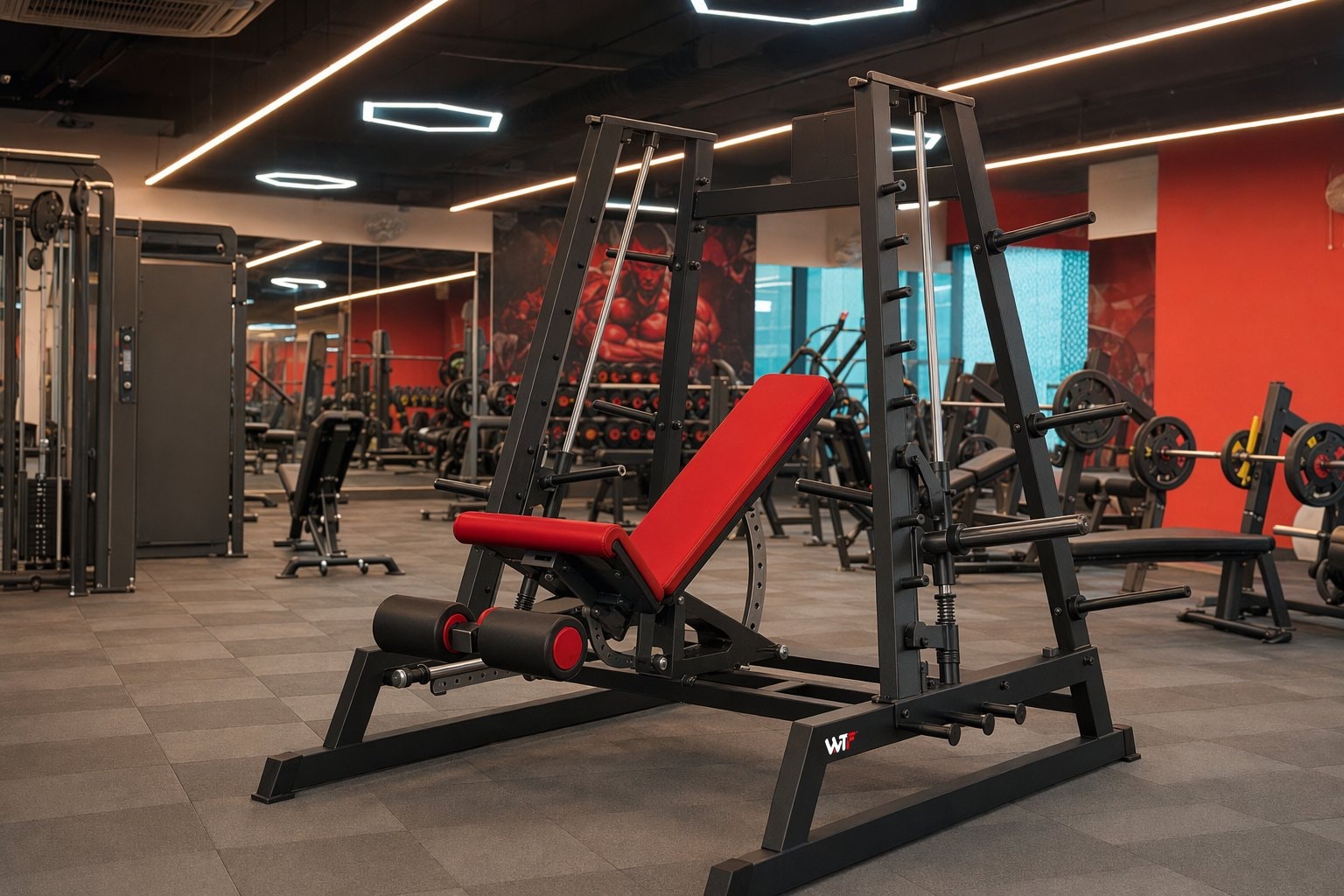
For a strength-focused setup, a bar integrated into a rack can be cleaner than a separate doorway bar. Browse rack-style solutions in the benches and racks category, and combine them with cable, band or suspension work from the functional training range if you are building a fuller corner.
Safety Checks Before You Hang
Every pull-up bar has a stated user-weight rating, but you should keep headroom between your body weight and the rated maximum. Do not choose a bar rated exactly at your weight. Clothing, movement, grip changes and imperfect installation all make headroom important.
Look beyond the headline rating. Check the mounting surface, fastener quality, bar diameter, knurl or grip sleeve, end caps, welds, bracket shape and whether your hands can grip without wrist discomfort. A thicker bar may challenge grip strength; a thinner bar may feel sharper under load. Neutral grips can be friendlier for some shoulders, while straight bars are simple and versatile.
For kids, a pull up bar for kids should be treated as supervised play and skill practice, not as a toy. Children may jump, swing, twist, climb from furniture or hang two at a time. Keep the area clear, avoid pressure-fit bars for unsupervised use, and choose a height where an adult can assist safely.
- Start from a dead hang only after confirming the bar is fully seated or fixed.
- Keep mats below the bar, but do not use a mat to justify a weak mount.
- Remove stools, chairs and sharp furniture from the landing area.
- Stop using the bar if you hear cracking, see frame movement or feel rotation.
- Do not add rings, heavy bags or suspension trainers unless the bar is designed for that use.
Price Questions: What to Expect Without Chasing the Lowest Tag
Pull up bar price depends on the mounting style, steel section, grip design, finish, included fittings and whether it is a compact doorway bar or a larger stand. WTF does not publish a price band for standalone home pull-up bars, so it is better to shortlist by safety and fit rather than by a tiny headline amount.
Searches for very low-price pull-up bars are common, but extremely low-priced products often leave you with less information about rating, frame compatibility, fittings or installation quality. Paisa vasool is not the lowest cart value; it is a bar you can mount correctly and use confidently.
If you want equipment pricing from WTF for a broader home or studio setup, ask for an itemised equipment quote. WTF provides a full GST invoice, delivers and installs, and can share an itemised quote within 24 hours for relevant equipment requirements.
When a Pull-Up Bar Is Not Enough
A home pull-up bar trains vertical pulling, grip and trunk control, but it does not replace a complete back and arm setup. Beginners who cannot yet perform bodyweight pull-ups may need band assistance, eccentric reps, lat pulldowns or an assisted chin movement. Advanced users may want multiple grip angles and safer loading options.
WTF does not list a doorway or wall-mount home bar; it does list the free-standing Parallel Bar + Chin Up J027 with a Heavy Duty Frame, plus commercial strength alternatives. For assisted bodyweight training, the Assisted Chin/Dip AMDM-08 has a 100 kg weight stack and dimensions of 1310*1380*2435mm. For vertical pulling, the Lat Pull Down AMDM-12 has a 100 kg weight stack and dimensions of 1340*1365*2290mm.
For rowing patterns that balance pull-up work, the Seated Horizontal Pulley AMDM-12A has a 100 kg weight stack and dimensions of 1790*1020*1530mm. For dip-focused training, the Tricep Extension/Dip A614 is listed with a Heavy Duty Frame. A gym owner planning a premium back zone may also compare the Iso Lateral Front Lat Pulldown AMV16, listed with a Black Frame + Red Arms.
For compact home planning, see the home gym use-case page. For dip and push-strength pairing with pull-ups, the dip station guide can help you decide whether a separate station makes sense.
WTF Duty Tiers and Buying Support
WTF runs 260+ gyms across India, so its equipment advice is framed around duty, installation and actual training zones rather than only product photos. The duty-tier system helps buyers separate light home accessories from machines built for heavier facility use.
| Tier | Duty description |
|---|---|
| Core | Core — full-commercial duty: cardio, selectorized, plate-loaded and functional lines rated for 16hr+/day floors, 7 days a week; 3mm steel main frames; continuous-duty AC motors on cardio (up to 5HP continuous). |
| Pro | Pro — performance/club duty for the free-weight zone: dumbbells, plates, bars, benches and racks built for thousands of drops and re-racks a week. |
| Signature | Signature — flagship strength pieces, heaviest builds in the range, for the zones that sell memberships on a walk-through. |
If you are in NCR and want to see machines in person, WTF has a showroom at D-27, Sector 112, Noida, UP 201305; use the Noida showroom directions before visiting. For a single home bar, your local structural condition still matters most. For a larger home gym, rack, assisted chin, cable and cardio choices can be planned together.