Plate loaded vs selectorized is mainly a choice between heavier, more adjustable loading and faster, beginner-friendly weight changes. For most Indian gym floors, the right answer is not either-or: use selectorized machines for guided basics and plate-loaded machines for the serious strength zone. WTF’s buying advice comes from a team that runs 260+ gyms, so the focus here is practical: member mix, layout, noise, plate storage and the machines that actually fit your floor.
What Plate Loaded and Selectorized Mean
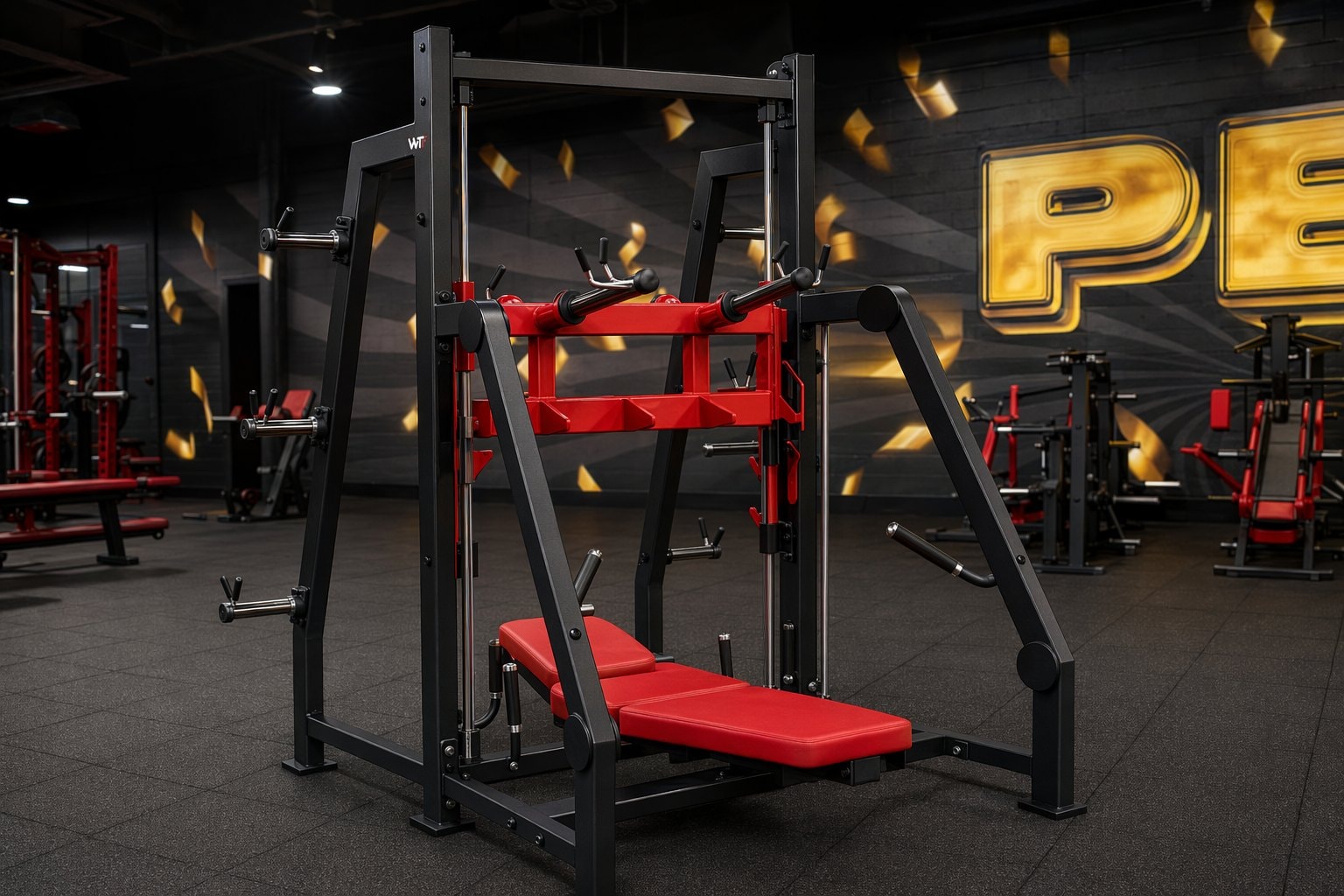
Plate-loaded machines take weight plates on loading horns. The user adds or removes plates manually, much like a barbell zone, but the motion path is guided by the machine. This is why plate-loaded strength machines are common around chest, back, shoulder and leg areas where members want a strong, gym-like feel without needing a spotter for every set.
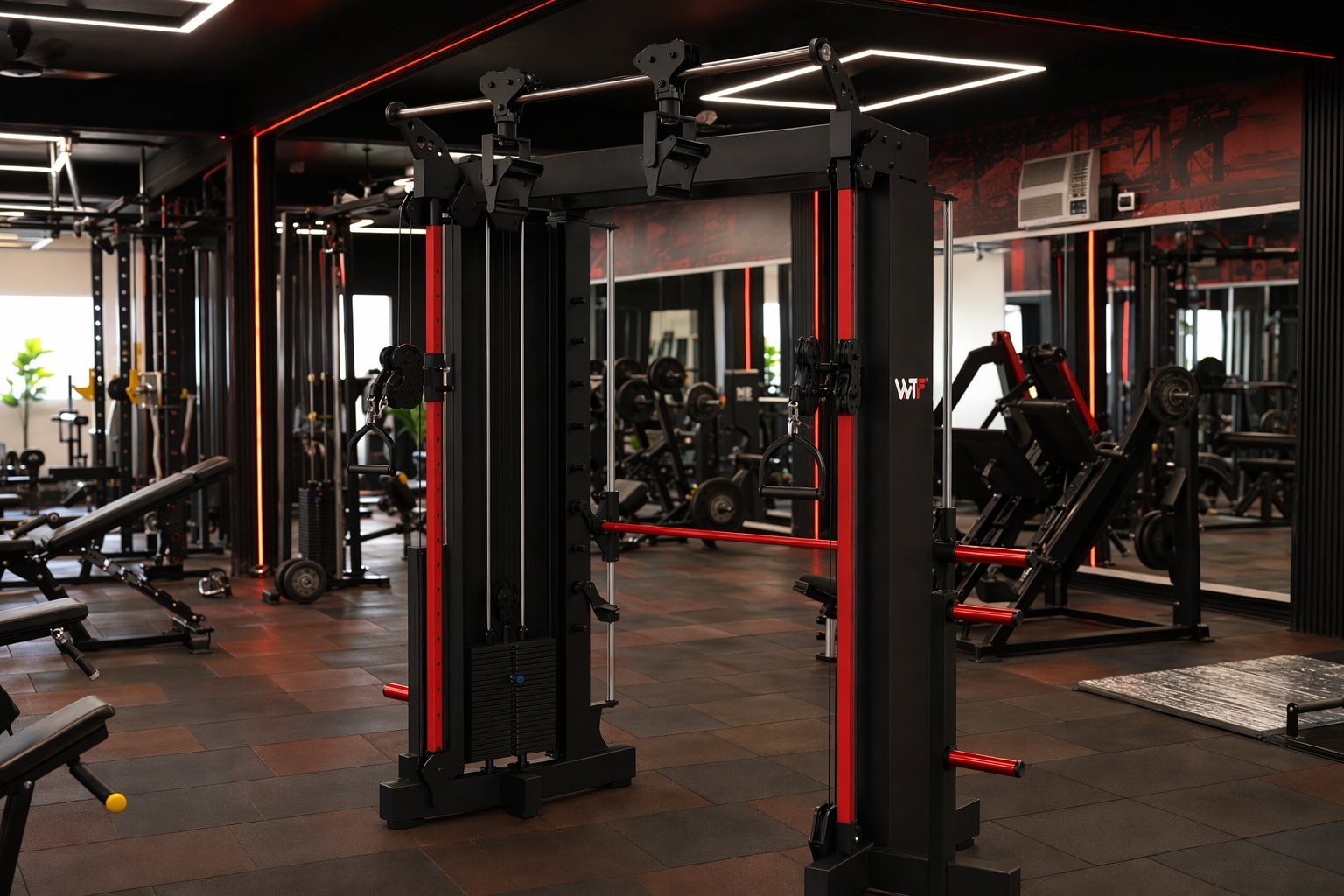
Selectorized machines, also called pin-loaded machines, use a built-in weight stack. The member shifts a pin to choose the load. The motion is usually very approachable for new members because there is no plate handling, no counting plates, and less setup confusion. WTF lists selectorized strength machines for core gym movements such as chest press, leg press, shoulder press, seated row and lat pull down.
The phrase plate loaded vs pin loaded is the same decision in simpler language. Pin loaded and selectorized refer to the weight-stack side of the comparison. Cable machines overlap with this discussion because many selectorized machines use cables and pulleys, while plate-loaded machines may rely more on arms, pivots and leverage.
Feel, Resistance Curve and Training Experience
Plate-loaded machines generally feel closer to free-weight training because the resistance is created by plates moving through a lever path. Members who train seriously often like this because loading is visible, the movement can feel more direct, and many models allow a natural strength-focused setup. For example, the Straight Line Chest Press A615 is a plate-loaded Signature model with a heavy duty frame and Made In India listing.
Selectorized machines feel more controlled and easy to repeat. A Chest Press AMDM-01, for example, is a Core selectorized model listed with a 100 kg weight stack, 1390*1300*1530mm dimension and Made In India listing. For a member doing a standard chest press machine pin loaded workout, the stack and pin system makes load selection simple.
Resistance curve matters because a machine can feel heavier in one part of the movement and lighter in another. Plate-loaded leverage machines may feel different from stack machines even when the selected load looks similar. That does not make one automatically better. It means your gym should place each type where the expected user understands the feel.
Iso-lateral designs are a strong reason to add selected plate-loaded pieces. In an iso-lateral pattern, the two sides can work independently, which helps members train left and right sides with better awareness. WTF catalogue options include the Iso Lateral Chest Press AMV01, Iso Lateral Low Row AMV07, Iso Lateral Decline Chest Press AMV08, Plate Loaded Iso Lateral Row AMV14 and Iso Lateral Front Lat Pulldown AMV16.
Speed, Beginners and Member Mix
Selectorized machines are usually faster for shared commercial floors. A new member can sit, adjust the pin, read the basic movement path and begin. This matters in a general fitness gym where many members rotate through full-body circuits, assisted workouts or trainer-led sessions. A multi gym station with weight stack follows the same logic: fast switching and easier load selection.
Plate loaded machines slow down load changes because members must carry, load and unload plates. That is not a problem in a bodybuilding or strength-heavy area; it may even be part of the experience. But on a busy mixed floor, scattered plates can create clutter, noise and extra walking around the machine.
For a chest area, compare the user journey. A chest press machine plate loaded setup suits members who already understand warm-up sets, plate matching and controlled loading. A chest press machine pin loaded setup is simpler for new members and for trainers moving clients quickly between stations.
- Choose selectorized first for beginner circuits, general fitness areas and trainer-led movement teaching.
- Choose plate loaded for visible strength zones, advanced members and lifts where heavy loading is expected.
- Use both when a gym wants a premium strength feel without making every new member handle plates.
- Avoid placing plate-loaded machines where there is no nearby plate tree or clear re-racking habit.
Space, Plate Storage, Noise and Upkeep
Space planning is where the plate loaded vs cable machines comparison becomes very practical. Plate-loaded equipment needs extra room around the machine for loading plates, stepping back, and keeping plates on storage trees. Selectorized and cable-stack stations keep the weight inside the frame, so the working area can feel tidier.
Noise is also different. Plate handling can create more sound when members load, unload or re-rack. Selectorized stacks can also make noise if users let the stack drop, but the load is contained inside the machine. If your gym is below offices, homes or a premium studio area, plan the strength zone and flooring carefully.
Upkeep points differ. Selectorized machines involve cables, pulleys, guide rods and stacks. Plate-loaded machines involve arms, pivots, bearings and loading points. Neither type should be ignored; the difference is what you inspect and clean. For Indian gyms with dust, sweat and heavy daily use, simple access for cleaning and visual inspection matters.
WTF uses duty tiers to help buyers separate use-cases. Core means “Core — full-commercial duty: cardio, selectorized, plate-loaded and functional lines rated for 16hr+/day floors, 7 days a week; 3mm steel main frames; continuous-duty AC motors on cardio (up to 5HP continuous).” Signature means “Signature — flagship strength pieces, heaviest builds in the range, for the zones that sell memberships on a walk-through.” You can read the full Core, Pro and Signature duty explanation before shortlisting.
Recommended Mix by Gym Floor Type
There is no single perfect ratio. The right mix depends on member profile, coaching style, available area and how much of the gym is meant to look strength-focused. Use this table as a buying direction before finalising your commercial gym equipment checklist by zone.
| Floor type | Selectorized priority | Plate-loaded priority | Why it works |
|---|---|---|---|
| Compact serious home gym | Low to medium | Medium | Fewer users; plate changes are manageable |
| General fitness gym | High | Medium | Fast pin changes help mixed users |
| Bodybuilding-focused gym | Medium | High | Members expect heavier plate work |
| Premium club floor | High | High | Beginner circuit plus visible strength zone |
| PT-led studio | High | Low to medium | Coaches need quick, tidy transitions |
For compact floors, selectorized basics often create a smoother experience: chest press, lat pull down, seated row, shoulder press and leg press can cover a lot of training needs. For a bigger strength zone, add plate-loaded chest press, row, shoulder press and leg press patterns to give serious members more loading options.
If you are choosing equipment as part of a new business plan, keep the business side on the sister site and use this article only for equipment selection; for broader setup planning, see the gym launch cost resource.
Catalogue Examples to Compare
For chest, compare a selectorized press against plate-loaded options. The Chest Press AMDM-01 has a 100 kg weight stack and defined dimension, so it suits a tidy, pin-loaded chest station. The Straight Line Chest Press A615 is a Signature plate-loaded option with a heavy duty frame. The Iso Lateral Chest Press AMV01 is also a plate-loaded Signature model, listed with Black Frame + Red Arms and Made In India.
For legs, the Leg Press AMDM-015 is selectorized, with 1985*1035*1530mm dimension, a 100 kg weight stack and Made In India listing. Plate-loaded leg choices include the Vertical Leg Press A616, listed with heavy duty frame and Made In India, and the Leg Press AMV10, also listed as plate-loaded Signature equipment with heavy duty frame.
For back, a selectorized Lat Pull Down AMDM-12 has 1340*1365*2290mm dimension, a 100 kg weight stack and Made In India listing. Plate-loaded alternatives include the Iso Lateral Front Lat Pulldown AMV16, the Incline Linear Row A611, the Standing T-Bar Row A617, the Iso Lateral Low Row AMV07 and the Plate Loaded Iso Lateral Row AMV14.
For shoulders, the selectorized Shoulder Press AMDM-03 has 1445*1450*1530mm dimension, a 100 kg weight stack and Made In India listing. The plate-loaded Shoulder Press A750 is a Signature model listed with a heavy duty frame and Made In India. This is a good example of how the same broad movement can sit in either a guided pin-loaded zone or a heavier plate-loaded zone.
Price Bands and Buying Process
Use MRP / list-price bands only for broad budgeting, because the final machine mix changes with duty tier, movement selection and quantity. From WTF’s price guide, the chest press machine price band is ₹1,35,500–₹2,00,500 MRP, the leg press machine price band is ₹1,71,000–₹2,30,000 MRP, and the lat pulldown machine price band is ₹1,33,000–₹1,89,000 MRP.
For complete equipment planning, WTF also lists gym packages such as Startup — ₹20 lakh, Pro Plus — ₹30 lakh and Flagship — ₹40 lakh. Treat these as package budget pages, not a rule that every floor must buy the same mix. A compact gym may need more selectorized basics, while a larger strength gym may push more budget into Signature plate-loaded pieces.
WTF delivers and installs, provides a full GST invoice, and can share an itemised quote within 24 hours. Buyers who want to see machines in person can visit the showroom at D-27, Sector 112, Noida, UP 201305. Paisa vasool selection comes from matching the machine to the user, not from filling the floor with one machine type.
Final Selection Checklist
- Start with member mix: beginner-heavy floors need more selectorized stations; strength-heavy floors need more plate-loaded machines.
- Map the movement patterns first: chest press, row, shoulder press, lat pull down and leg press should not all compete for the same corner.
- Plan plate storage before ordering plate-loaded equipment, especially around leg press and chest press zones.
- Keep fast-change machines near trainer-led or circuit areas, and slower plate-loaded pieces in the strength zone.
- Compare duty tier, frame listing, stack listing and dimensions only from catalogue specifications.
- Ask for an itemised quote so the plate-loaded vs selectorized balance is visible line by line.