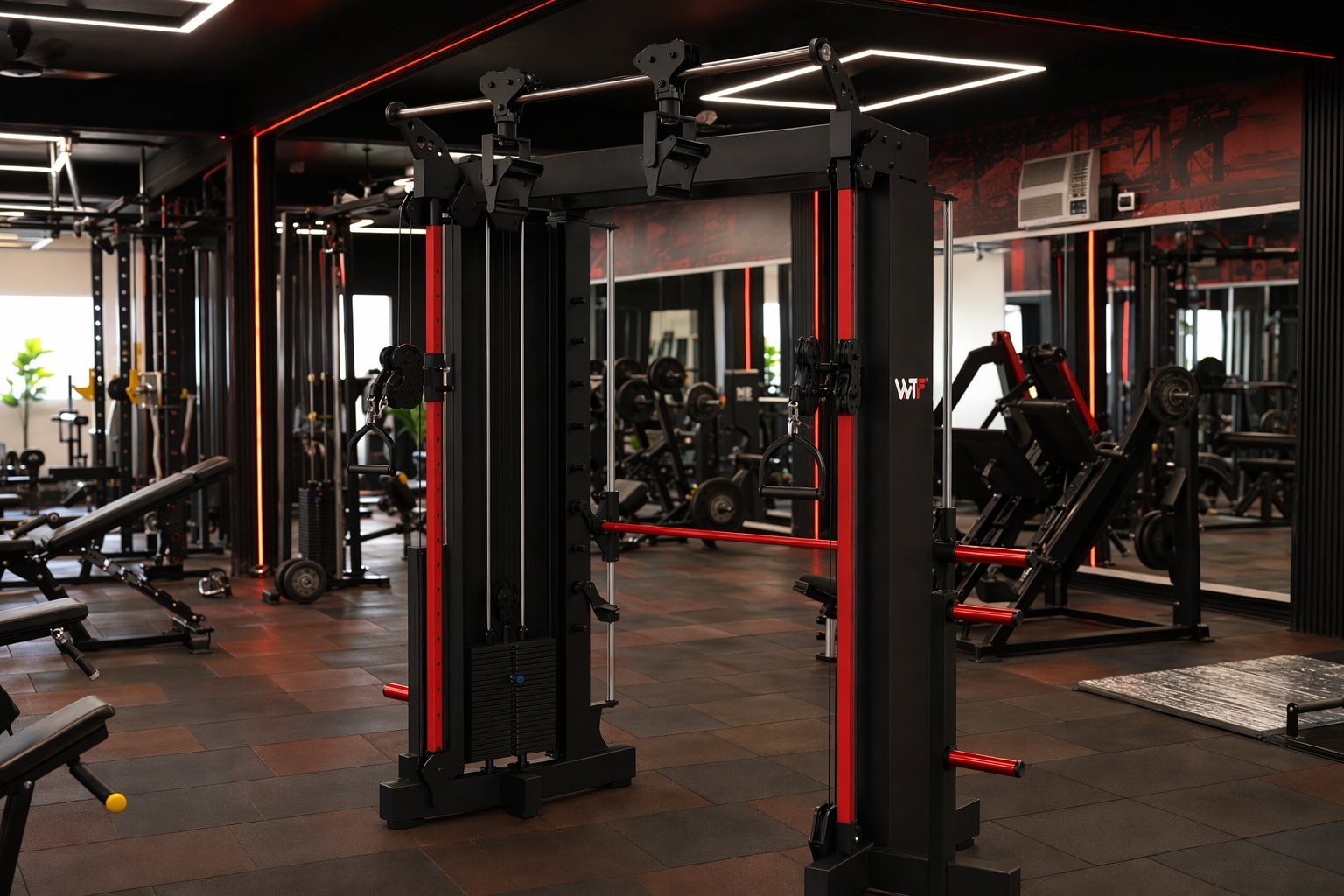
This is the question every first-time gym owner in India eventually asks, and almost every answer online is written by someone with inventory to move — importers say imported, manufacturers say Indian. Our position is unusual: we run 260+ gyms and have operated both under real member load for years. So here is the honest breakdown, including the cases where imported equipment genuinely is the right call.
How the import trade actually works
Most “imported” commercial equipment sold in India falls into two buckets. The first is genuine premium lines from global brands, sold through authorized Indian distributors at a 2–4× premium over comparable Indian-manufactured machines. The second — much larger — bucket is generic container imports: unbranded or lightly-branded machines bought from overseas catalogues, landed in bulk, stickered and sold as “imported quality.” The first bucket is excellent equipment with an economics problem. The second is a lottery with a paint job.
The distinction matters because the word “imported” does no work by itself. A container-import leg press has none of the engineering pedigree the word is borrowed to imply — and when its bearing seizes, there is no factory relationship behind it, only a trader deciding whether your repair is worth their margin.
What “manufactured in India” really means
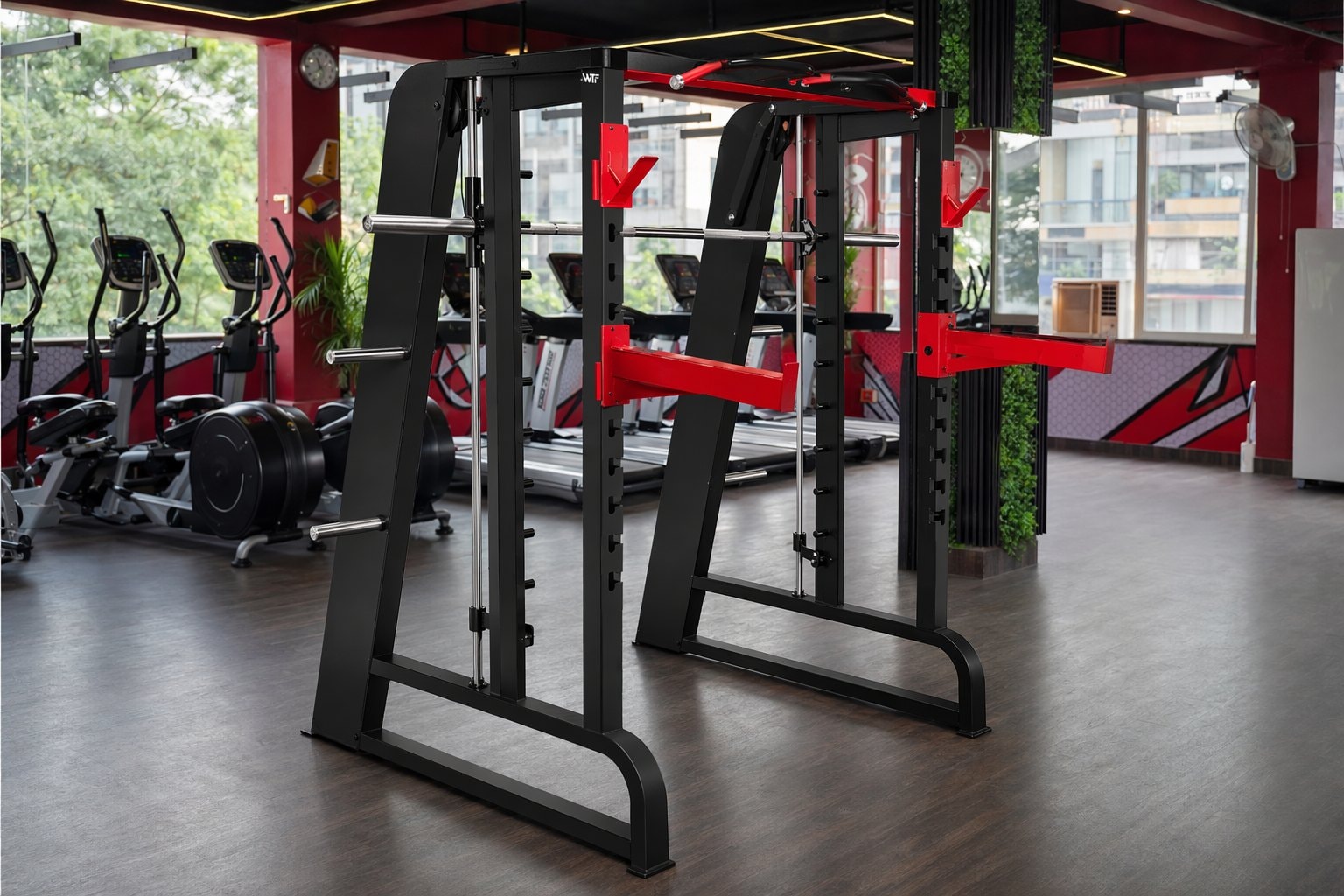
Serious Indian manufacturing has changed in the last decade. Laser-cut frames, robotic welding and powder-coating lines are now standard at the credible factories, and commercial-grade Indian strength equipment routinely survives what matters: years of 24×7 member abuse. Two honest caveats. First, motors, consoles and some electronics are still typically imported components inside Indian-built machines — that is normal, and a maker who admits it is being straight with you. Second, the quality spread among Indian makers is wide; the same seven questions from our manufacturer-selection guide apply in full.
When imported genuinely makes sense
We would be lying if we said never. Three cases hold up in practice:
- Flag mandates. A hotel chain or international franchise may contractually require specific global brands. There is no argument to have — the contract decides, and the premium is a cost of the flag.
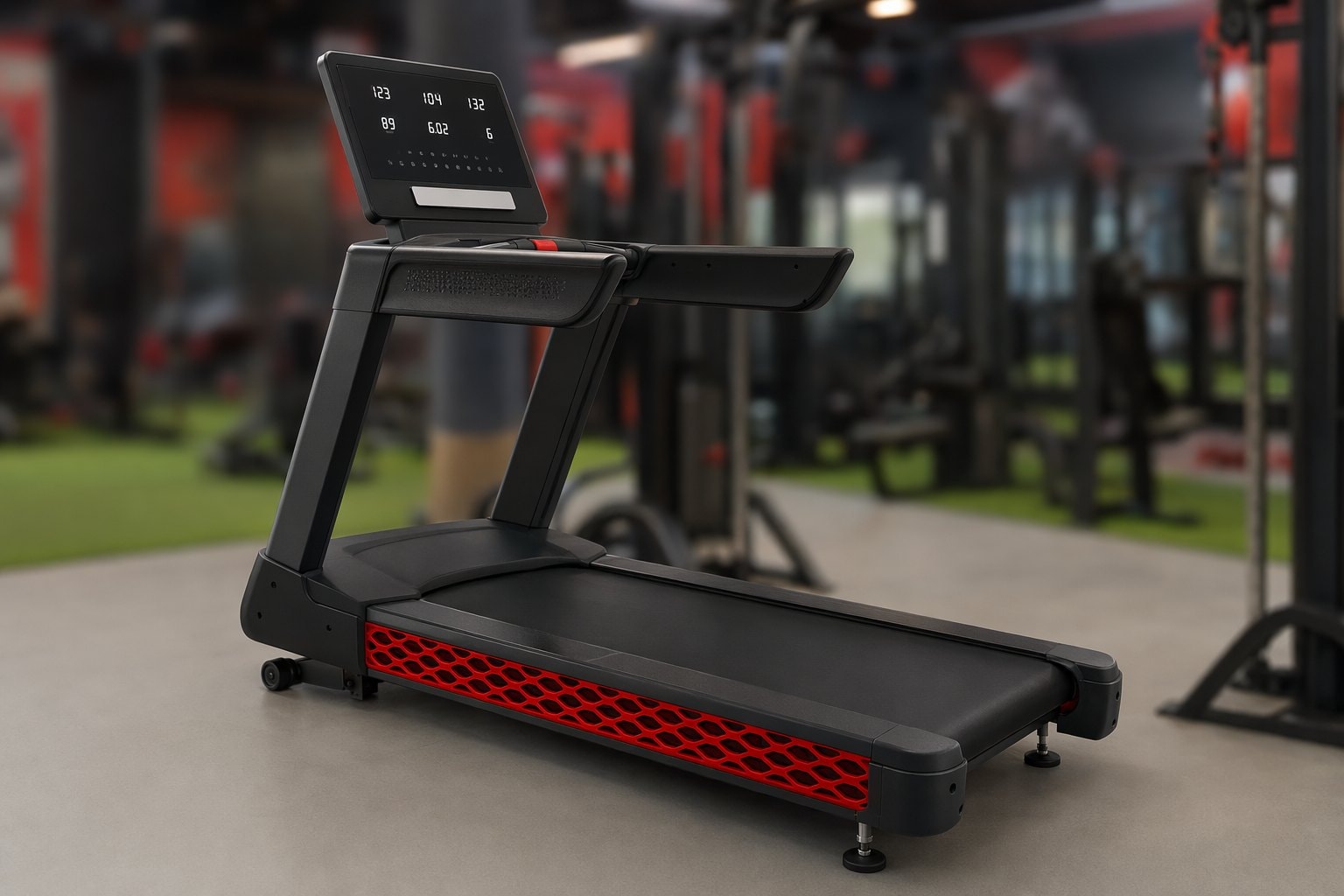
- Premium positioning. If your club sells ₹5,000+ monthly memberships, the brand on the treadmill console is part of the product. Top-tier imported cardio has a feel and a finish that justifies its place in that pitch — as long as you buy the service story with equal care.
- Genuine capability gaps. A few niche categories still have no credible Indian maker. Where that is true, import — knowingly, with spares terms in writing.
Notice what is not on the list: durability. For standard commercial strength and most cardio, a well-made Indian machine at a third of the price survives member load just as long. We know because both run on our floors.
The spares and service reality
This is where five-year outcomes are decided, and where the brochure goes quiet. An imported machine is only as good as its Indian distributor — and distributorships change hands. When a drive board fails on an imported treadmill, the part often ships against an import order: four to eight weeks of a dead machine on your floor. Members do not cancel because your equipment is foreign or Indian. They cancel because it is broken, and stays broken.
Whoever you buy from, get three things in writing: which spares are physically stocked in India, the service SLA in hours, and what you lose if you never buy their AMC. Our own answers are public: spares stocked in India, a 72-hour service SLA, and an AMC that stays optional — the same terms that keep the 260+ gyms WTF runs open, published on our terms of business page.
Total cost of ownership: the 5-year math
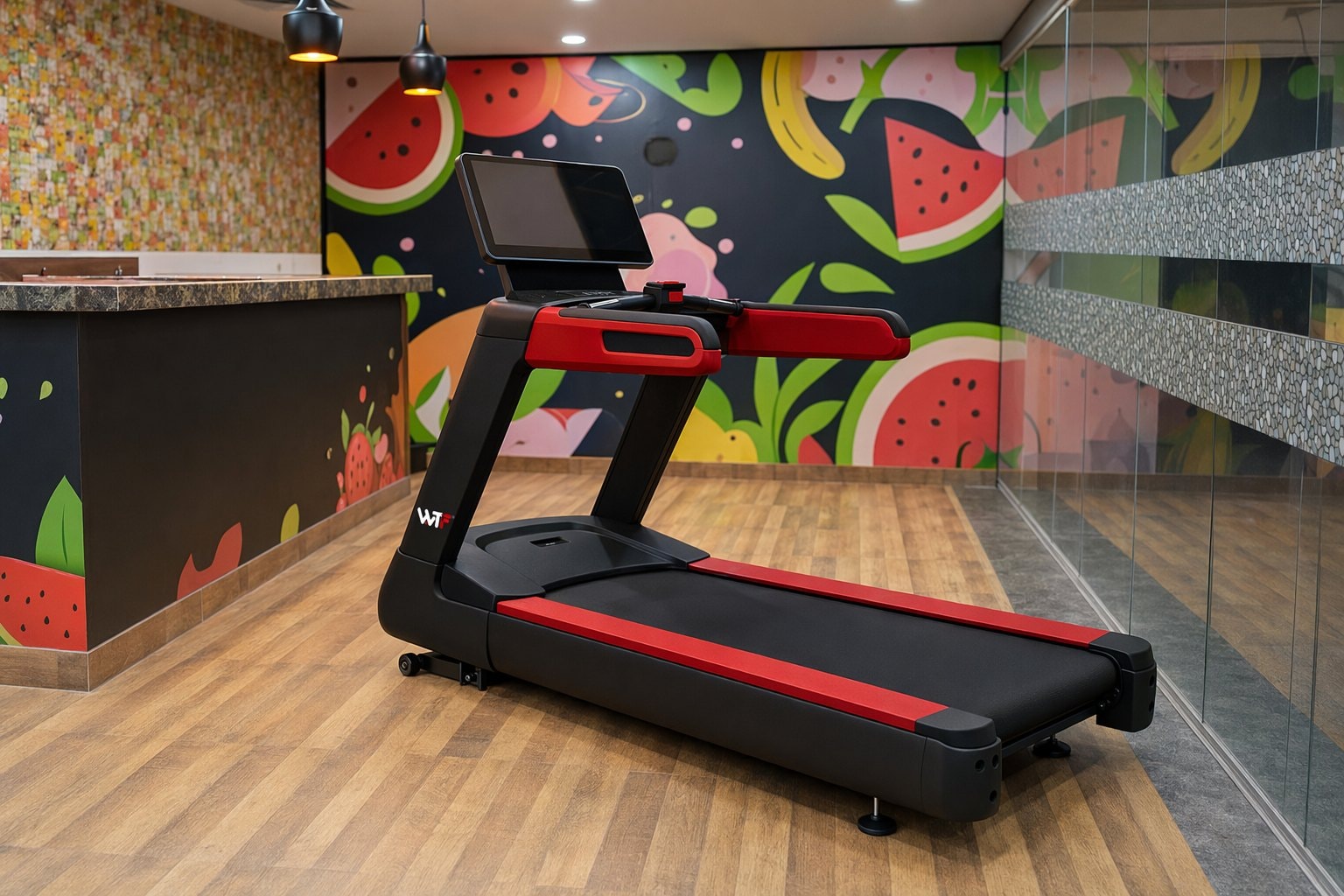
Compare a ₹4.5 lakh imported treadmill against a ₹1.5 lakh Indian-manufactured one, both commercial-grade. Over five years the imported unit must deliver 3× the value — through longevity, member appeal or uptime — just to justify the price gap. It usually delivers on feel and sometimes on longevity, and gives most of it back in service delays and parts pricing. For a mid-market gym, that math almost always lands on Indian-manufactured for strength, and Indian-manufactured or selectively imported for cardio depending on positioning.
Our catalogue reflects exactly that logic — 660 machines that earned their slots on our own floors, each duty-rated and priced in the open. Browse the full equipment range, or see how the machines assemble into costed floors in gym setup cost in India: real numbers.